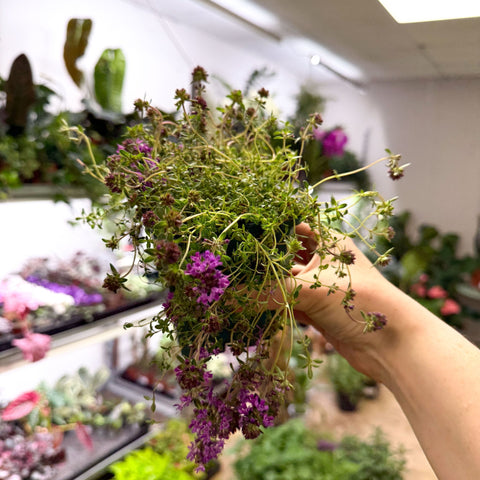
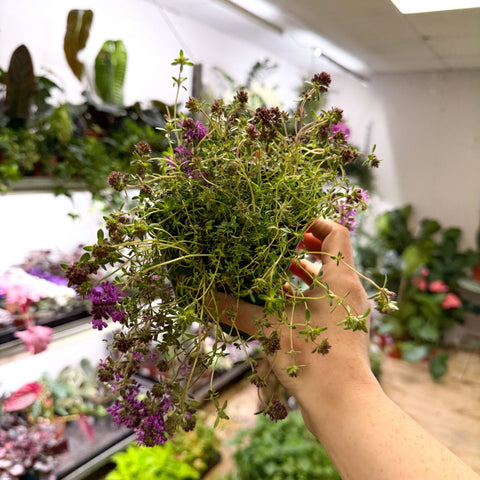
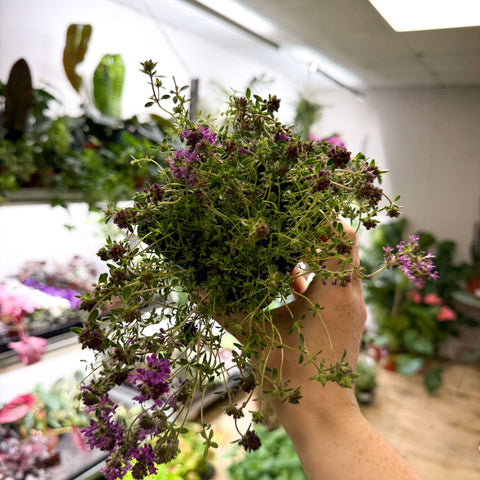
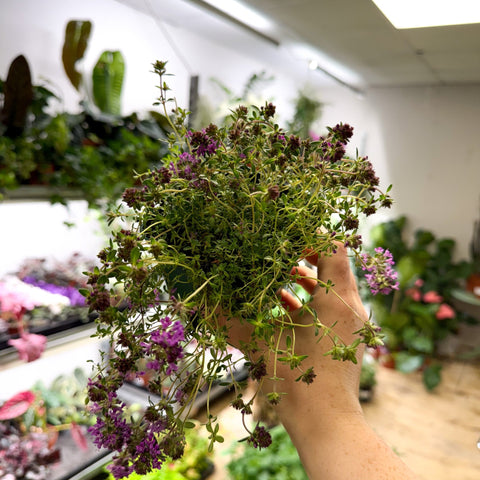
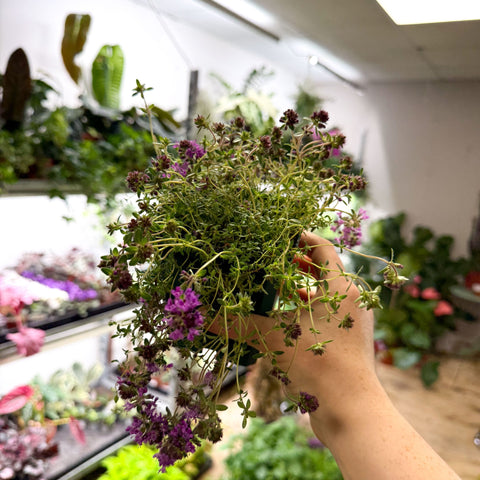
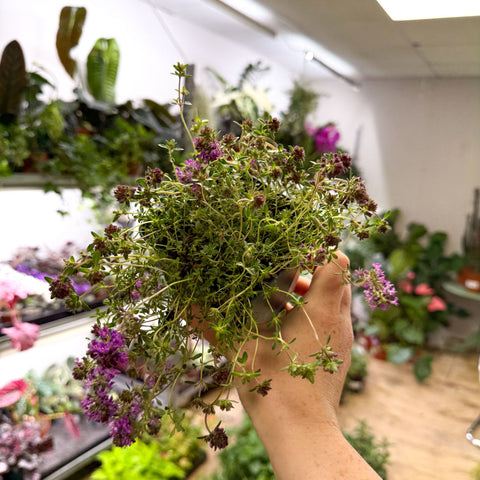
This low growing, mat-forming thyme produces a carpet of tiny aromatic leaves smothered in vibrant crimson-pink flowers during summer. Thymus serpyllum ‘Coccineus’ is an excellent ground cover plant, thriving in sunny borders, gravel gardens, rockeries, between paving stones, and wildlife-friendly planting schemes. When in flower, it creates a colourful display that attracts a wealth of pollinating insects.
Thymus serpyllum ‘Coccineus’, commonly known as Red Creeping Thyme, is valued for its drought tolerance, evergreen foliage, and ability to thrive in challenging, dry conditions. Its fragrant leaves release a pleasant aroma when stepped on or brushed against, making it particularly popular for planting along paths and between paving.
Perennial
Evergreen, Ground Cover, Aromatic, Pollinator Friendly
Flowers: June to August
Foliage: Year-round
Scientific Name
Thymus serpyllum ‘Coccineus’ (crimson creeping thyme)
Synonyms
Sometimes sold as Thymus praecox ‘Coccineus’, although Thymus serpyllum ‘Coccineus’ is the more commonly used name in cultivation.
Common Name
Red Creeping Thyme
Creeping Thyme
Wild Thyme
Origin
The species Thymus serpyllum is native throughout much of Europe, including the United Kingdom, where it naturally grows on grasslands, heathlands, rocky slopes, and coastal areas. ‘Coccineus’ is a cultivated variety selected for its vivid flower colour.
Pruning Tips
Lightly trim after flowering to maintain a neat, compact shape and encourage dense growth. Avoid cutting back into old woody stems.
Wildlife Value
An outstanding plant for pollinators. The nectar-rich flowers attract bees, bumblebees, butterflies, hoverflies, and many other beneficial insects throughout summer.
Positioning
Thrives in full sun and is ideal for gravel gardens, rockeries, alpine beds, wildlife gardens, green roofs, and planting between paving stones. Requires an open, sunny position for best flowering.
Water
Water regularly during establishment. Once established, it is highly drought tolerant and generally only requires watering during prolonged dry spells.
Soil
Prefers free-draining soil and performs best in sandy, chalky, or gritty conditions. Avoid heavy, wet soils, particularly during winter.
Food
Requires very little feeding. A light application of garden compost in spring is usually sufficient. Excessive fertiliser can reduce flowering and lead to soft growth.
Pet-safe
Generally regarded as non-toxic to cats, dogs, and horses.
Sprouts Top Tips
Plant between stepping stones or along the edge of a path where the aromatic foliage can be enjoyed whenever it is gently brushed or walked upon.
Did You Know?
The cultivar name Coccineus comes from the Latin word for “scarlet” or “crimson”, a reference to its vibrant flower colour. Wild thyme has been valued for centuries by both gardeners and wildlife, providing one of the best nectar sources for many species of bees.