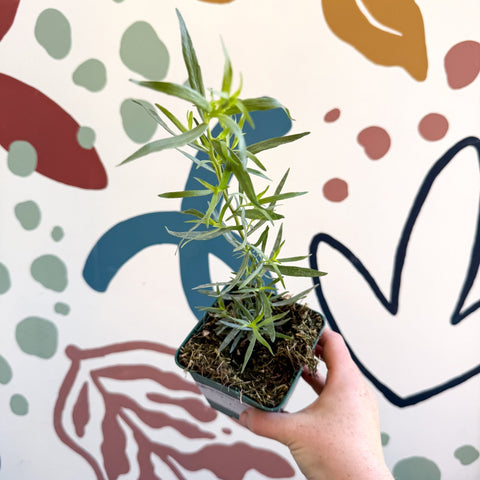
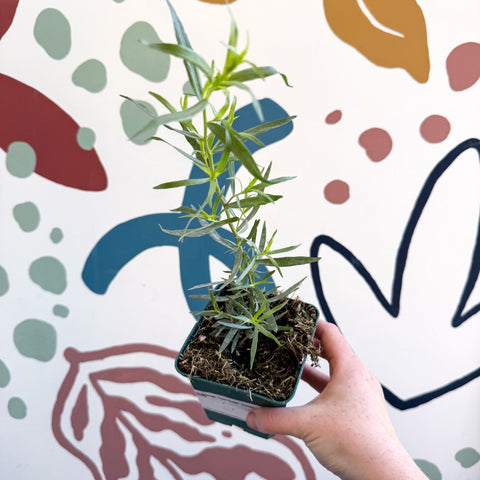
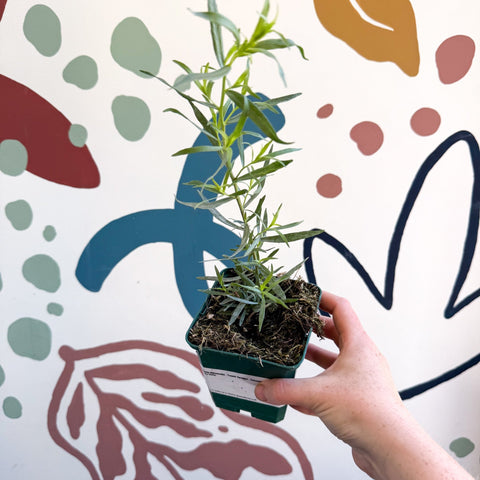
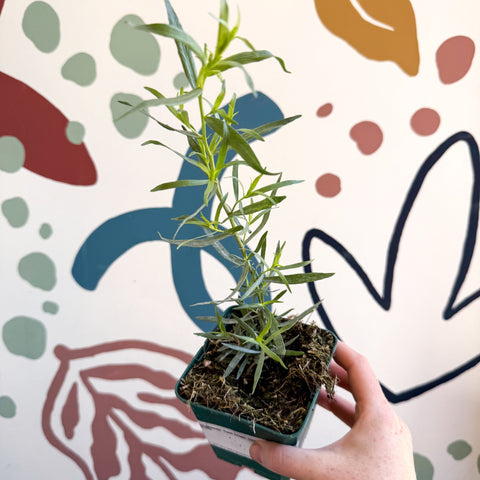
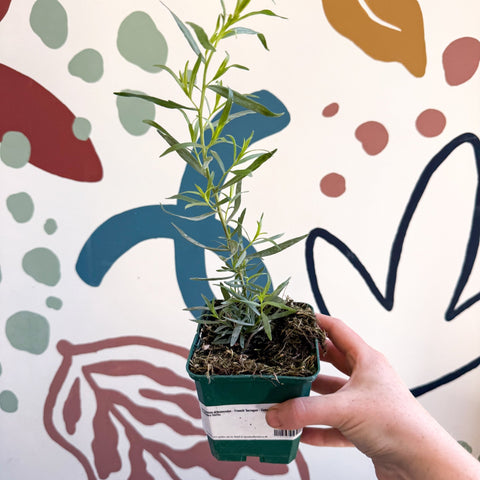
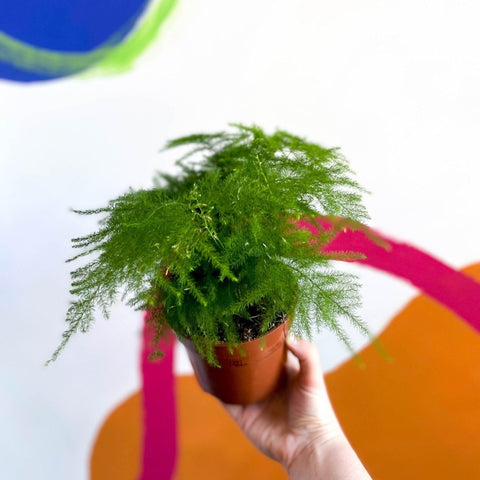
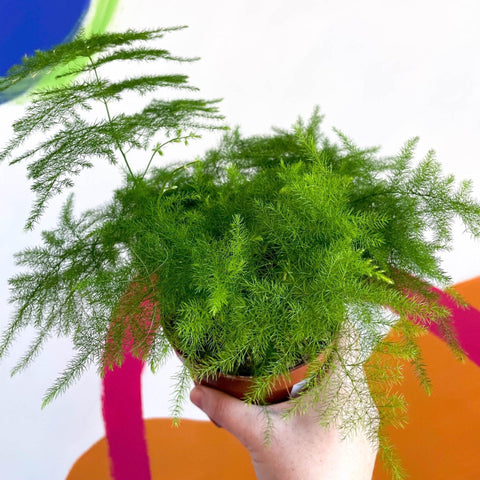
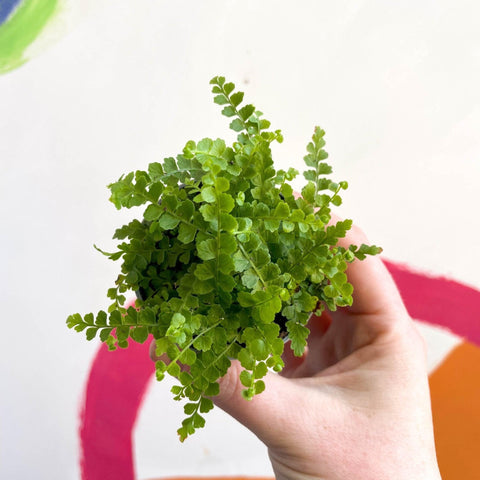
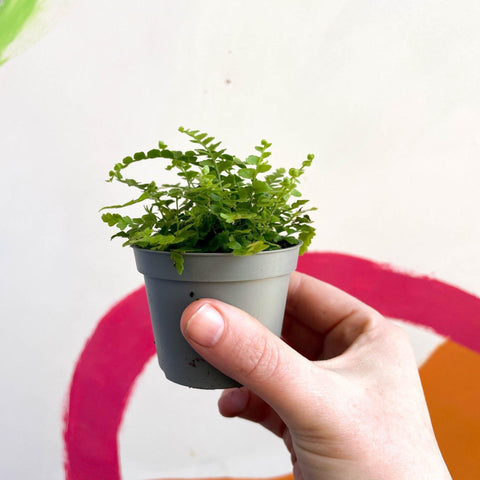
Dieses aromatische Kraut bildet schlanke, aufrechte Stiele mit schmalen, leuchtend grünen Blättern, die einen ausgeprägten Anisgeschmack haben. Artemisia dracunculus, bekannt als Französischer Estragon, ist eine feste Größe in vielen klassischen Gerichten und Kräutermischungen. Mit seinem eleganten, zarten Laub und seiner kompakten Form ist er sowohl in Zierbeeten als auch in einem Kräutergarten oder Topf zu Hause.
Artemisia dracunculus, gemeinhin als Französischer Estragon bekannt, wird für seine kulinarischen Verwendungsmöglichkeiten und seine zarte Textur geschätzt. Obwohl er im Vereinigten Königreich selten blüht, bringt er elegante Grünflächen und unverzichtbaren Geschmack in jeden Kräutergarten.
|
Mehrjährig
|
Aufrecht, krautig, aromatisches Laub
|
Blüten: Blüht selten in Großbritannien (klein, grüngelb, wenn doch)
Laub: April – Oktober
|
Wissenschaftlicher Name
Artemisia dracunculus (vom lateinischen dracunculus, „kleiner Drache“, wahrscheinlich in Anspielung auf die schlangenförmigen Wurzeln oder den scharfen Geschmack)
Synonyme
Estragon
Gebräuchlicher Name
Französischer Estragon
Herkunft
Heimisch in Südrussland und Westasien; in Frankreich weit verbreitet für kulinarische Zwecke angebaut
Schnitt-Tipps
Regelmäßig den Sommer über schneiden, um buschigeres Wachstum zu fördern und eine gepflegte Form zu erhalten. Im Herbst vollständig zurückschneiden, wenn die Pflanze abstirbt
Wert für die Tierwelt
Geringer Wert für die Tierwelt, obwohl dichtes Wachstum Insekten Schutz bieten kann
Standort
Volle Sonne an einem geschützten Ort; ideal für Kräuterbeete, Hochbeete oder Töpfe
Wasser
Boden leicht feucht, aber nicht nass halten; nach dem Anwachsen trockenheitstolerant, profitiert aber von regelmäßiger Bewässerung bei heißem Wetter
Boden
Durchlässiger Boden ist unerlässlich – gedeiht in sandigen oder lehmigen Bedingungen. Schwere, nasse Böden vermeiden
Düngung
Alle 4–6 Wochen während der Wachstumsperiode mit einem ausgewogenen Flüssigdünger düngen
Haustiersicher
Im Allgemeinen ungiftig für Haustiere, aber große Mengen können leichte Magen-Darm-Beschwerden verursachen
Sprouts Top-Tipps
Französischer Estragon bildet keine Samen und muss daher durch Teilung oder Stecklinge vermehrt werden. Alle 2–3 Jahre im Frühjahr teilen, um die Pflanzen zu verjüngen und den Geschmack stark zu erhalten.