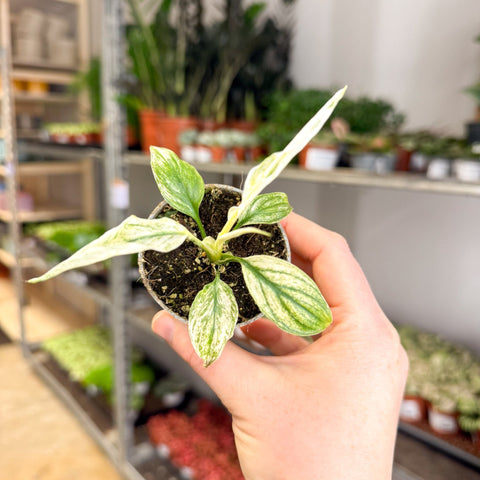
This striking cultivar of the classic Peace Lily features large, glossy green leaves marked with creamy white variegation, making it a standout foliage plant. Elegant white flowers may appear when conditions are right, rising above the foliage on tall stems. While still relatively easy to care for, this variegated form benefits from slightly brighter conditions than standard Peace Lilies to maintain its patterning.
Scientific Name
Spathiphyllum ‘Sensation Variegated’
Spathiphyllum is a long established genus of tropical plants commonly grown as houseplants. The cultivar name ‘Sensation’ refers to its vigorous growth and larger leaf size, with ‘Sensation Variegated’ selected for its distinctive variegated foliage.
Synonyms
Sometimes listed as Spathiphyllum ‘Sensation Variegata’
Common Name
Variegated Peace Lily, White Sails
Origin
Originates in tropical South American rainforests, especially Colombia and Venezuela
Light
Peace Lilies can thrive in a range of indirect light conditions, including shadier spots. As this variety is variegated, it should not be kept too dark, as low light can cause new growth to become greener and lose its variegation. A bright room away from direct sun, or close to a north facing window, is ideal.
Water
Allow at least the top third of the compost to dry out between waterings. If the plant becomes too dry it may droop dramatically, but this is usually easy to recover from with a thorough watering. Overwatering is more harmful than underwatering. Use tepid water when the plant is flowering, as cold water can shock the plant and damage blooms.
Humidity
Enjoys higher humidity and will benefit from regular misting or the use of a humidity tray. Brown, curled or crispy leaf edges are often a sign that the air is too dry.
Soil
Use a well draining but moisture retentive compost. A mix suitable for Calatheas will also work well. Repot every couple of years in spring as the plant grows. Avoid planting directly into terracotta pots, as these can keep roots too cool.
Food
Feed every four waters during spring and summer. Reduce feeding to every six waters in autumn and winter.
Temperature
Prefers temperatures between 12 and 25°C. Avoid exposure to temperatures below 10°C and keep away from cold draughts.
Pet safe
No. This plant is toxic to pets and small humans if ingested.
Sprouts Top Tips
Peace Lilies dislike soggy soil, so watch for signs of overwatering such as browning foliage, yellowing lower leaves, brown spots, stunted growth or wilting. If the compost feels wet, reduce watering and allow it to dry out properly before watering again. Check roots occasionally and ensure they are firm and pale rather than brown or mushy, especially in cooler or shadier conditions.
Extras
This variety benefits from brighter indirect light than green forms to maintain strong variegation and may flower more reliably when kept consistently warm and evenly watered.
Did You Know
Variegated Peace Lilies are slower to grow than standard green forms, as the pale areas of the leaves contain less chlorophyll, making them slightly more light dependent.