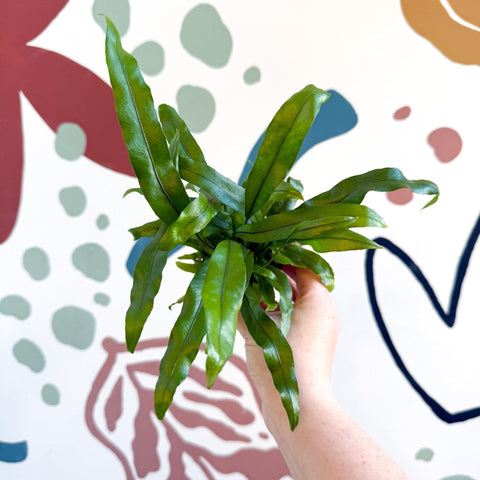
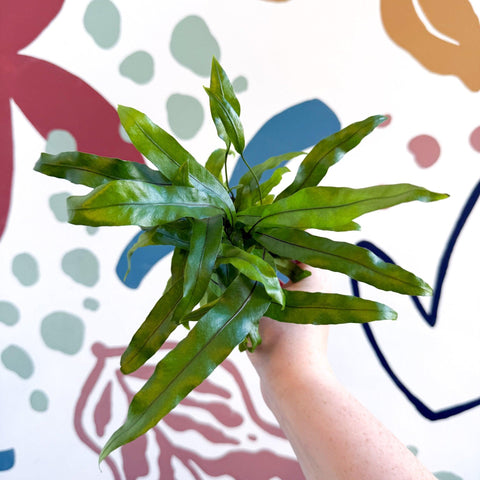
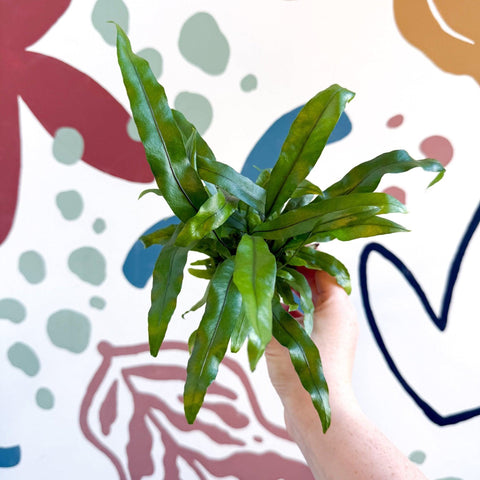
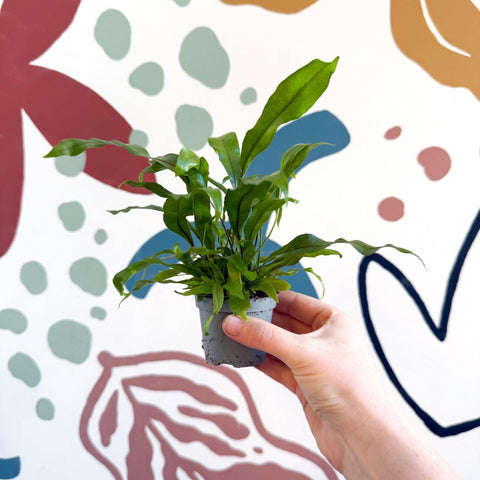
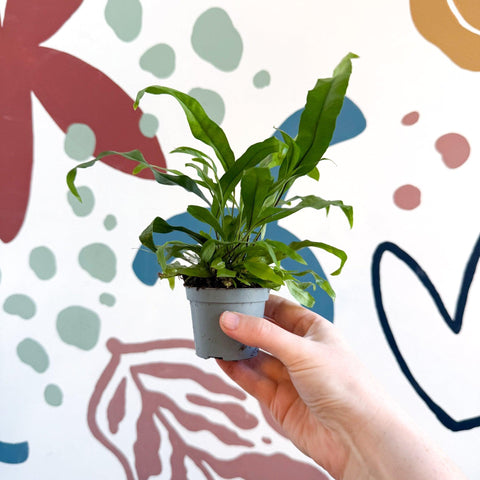
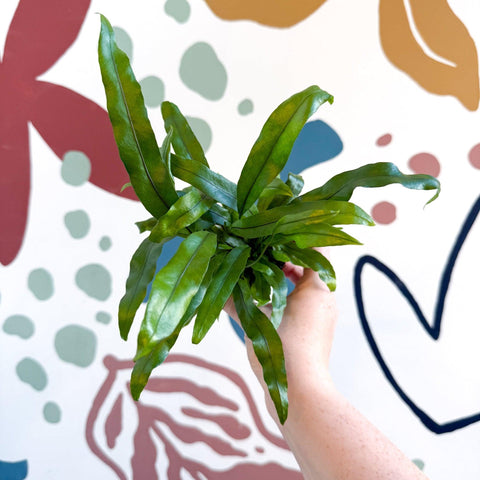
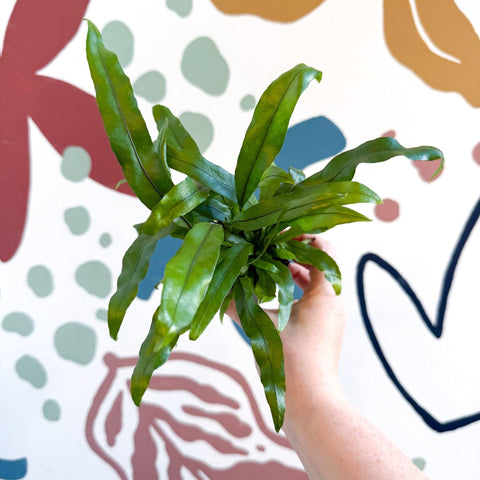
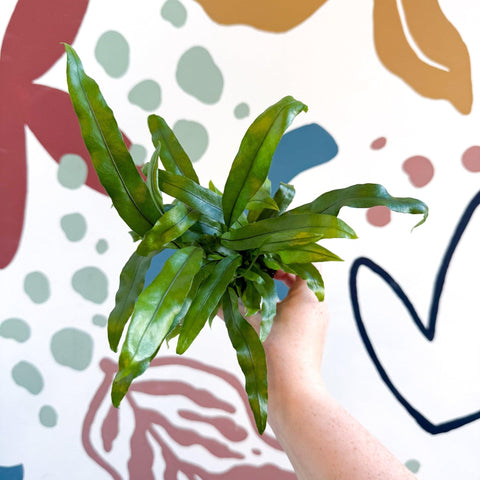
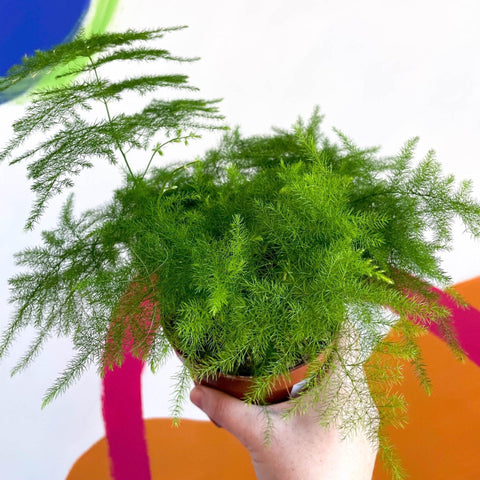
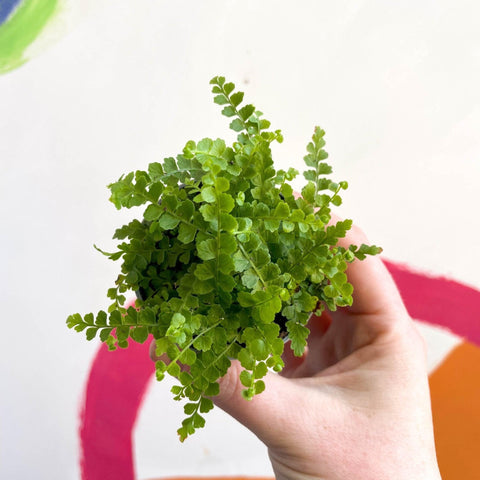
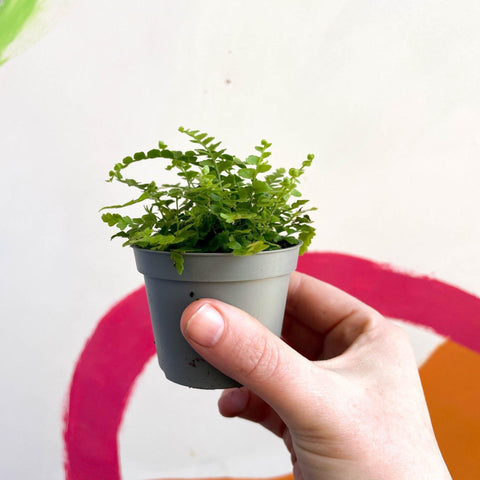
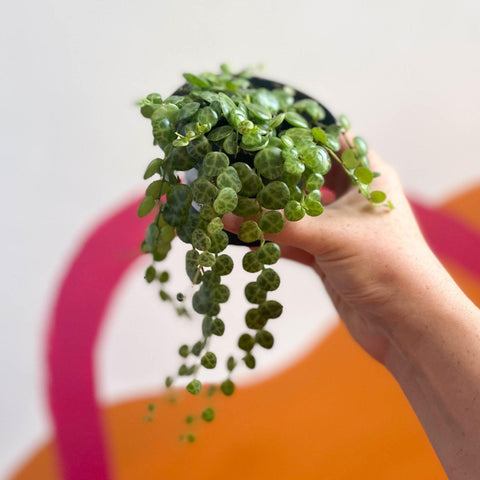
Microsorum pteropus ist ein echtes Terrarium-Grundnahrungsmittel, ein pflegeleichter Farn mit langen, bogenförmigen grünen Wedeln und einem langsamen, stetigen Wuchsverhalten. Ursprünglich aus Südostasien stammend, wächst diese Art natürlicherweise an Bachufern und feuchten Waldböden, was sie perfekt für Umgebungen mit hoher Luftfeuchtigkeit und geschlossenen Terrarien macht. Seine Rhizome bevorzugen es, auf harten Oberflächen platziert zu werden, anstatt in Erde vergraben zu werden, was ihn auch zu einer beliebten Wahl für Aquarien macht, wo er vollständig untergetaucht und an Steinen oder Treibholz befestigt wachsen kann.
Wissenschaftlicher Name
Microsorum pteropus (flügelfüßiger Microsorum)
Synonyme
Polypodium pteropus Blume, Leptochilus pteropus
Allgemeiner Name
Javafarn
Herkunft
Heimisch in Südostasien – einschließlich Malaysia, Thailand und Indonesien – typischerweise an Bächen und in schattigen, feuchten Wäldern wachsend.
Licht
Bevorzugt helles, indirektes Licht oder schwaches, geflecktes Licht. Zu viel direkte Sonneneinstrahlung kann die Wedel verbrennen. In Terrarien oder Aquarien gedeiht er bei geringen bis mittleren Lichtverhältnissen.
Wasser
Halten Sie die Umgebung konstant feucht, aber nicht durchnässt. Vermeiden Sie in einem Terrarium eine Überwässerung der Wurzeln – besprühen Sie stattdessen regelmäßig und sorgen Sie für eine gute Luftfeuchtigkeit. Wenn er untergetaucht ist (z. B. Aquarium), stellen Sie sicher, dass weiches, entchlortes Wasser verwendet wird.
Luftfeuchtigkeit
Hohe Luftfeuchtigkeit ist für beste Ergebnisse unerlässlich. In geschlossenen oder teilweise geschlossenen Terrarien gedeiht diese Pflanze. Wenn Sie sie an der frischen Luft halten, besprühen Sie sie häufig oder stellen Sie sie in einen natürlich feuchten Raum wie ein Badezimmer.
Erde
Mag es nicht, wenn seine Wurzeln in Erde vergraben sind – befestigen Sie das Rhizom mit Schnur, Draht oder Pflanzenkleber an einem Stein, Treibholz oder einer Rinde. Verwenden Sie in Terrarien eine epiphytische Pflanzmethode oder legen Sie es vorsichtig auf ein gut durchlässiges Substrat wie Moos oder LECA.
Nahrung
Während der Vegetationsperiode (Frühling bis Frühherbst) einmal im Monat leicht mit einem verdünnten, ausgewogenen Flüssigdünger düngen. Für Aquarien bei Bedarf gelegentlich einen flüssigen Aquariendünger verwenden.
Temperatur
Bevorzugt Temperaturen zwischen 20–28 °C. Vermeiden Sie kalte Zugluft oder Temperaturen unter 15 °C.
Haustiersicher
Ja – ungiftig für Katzen, Hunde und Menschen.
Sprouts Top-Tipps
Vergraben Sie niemals das Rhizom! Ob in einem Terrarium oder einem Aquarium, dieser Farn wird faulen, wenn sein Rhizom von Erde oder Kies bedeckt ist. Montieren Sie es auf einer harten Oberfläche und lassen Sie es sein Ding machen.
Extras
Kann leicht durch Teilen des Rhizoms oder durch Trimmen und Einpflanzen der kleinen Pflanzen, die aus den Spitzen der reifen Wedel wachsen, vermehrt werden.
Wussten Sie schon?
Javafarn ist seit langem ein Favorit von Aquascapern, nicht nur wegen seiner anmutigen Form, sondern auch weil Fische ihn im Allgemeinen in Ruhe lassen – was ihn ideal für naturalistische Tank-Setups macht.