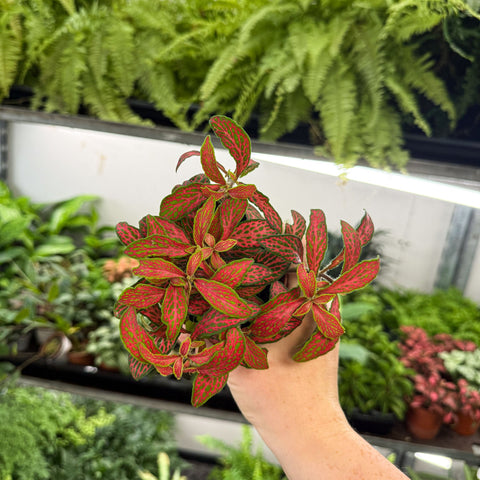
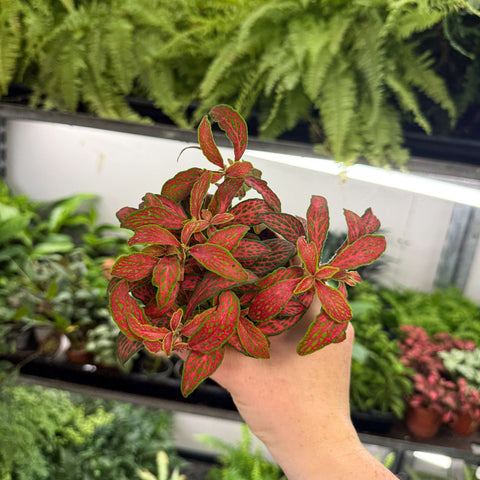
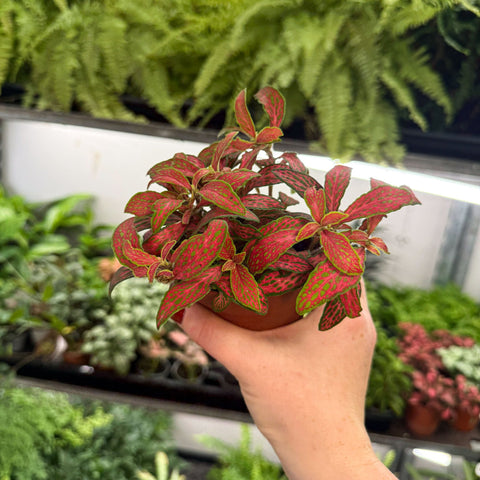
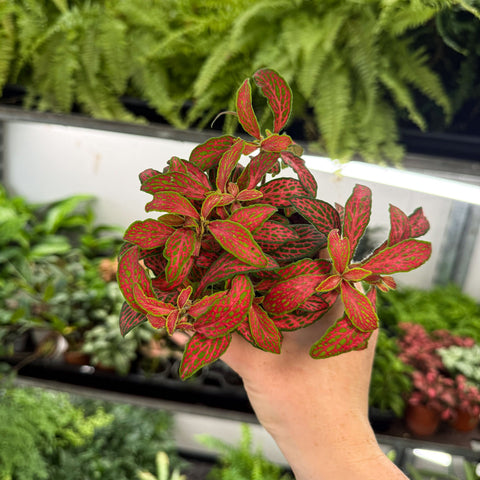
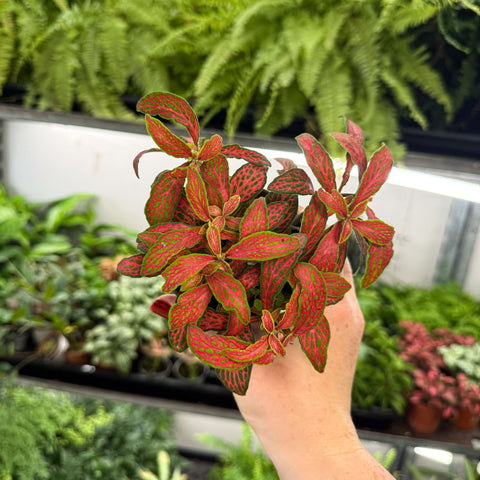
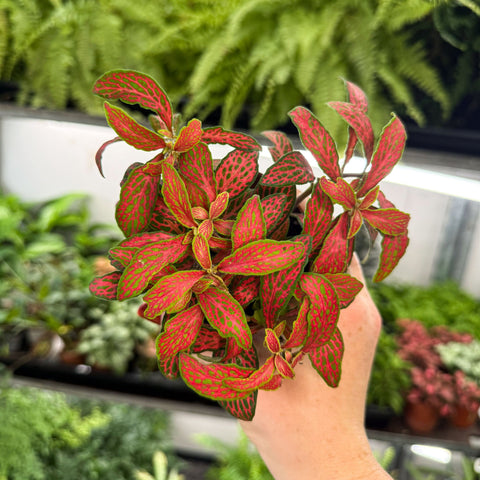
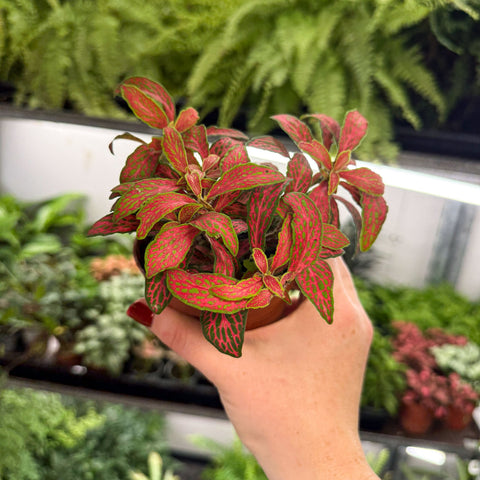
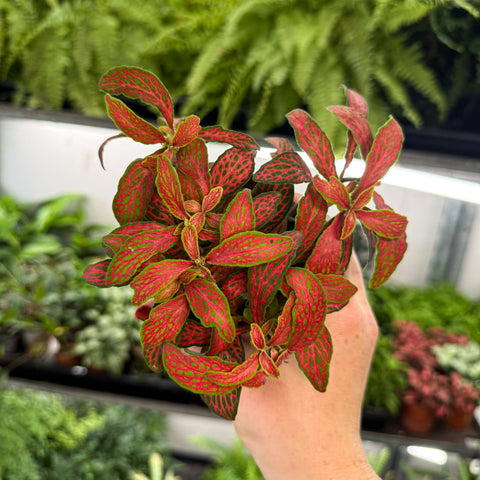
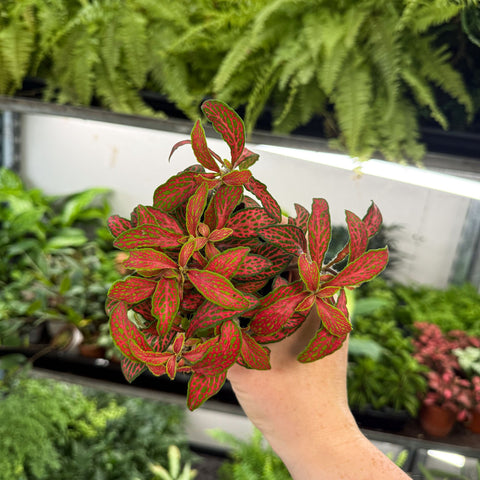
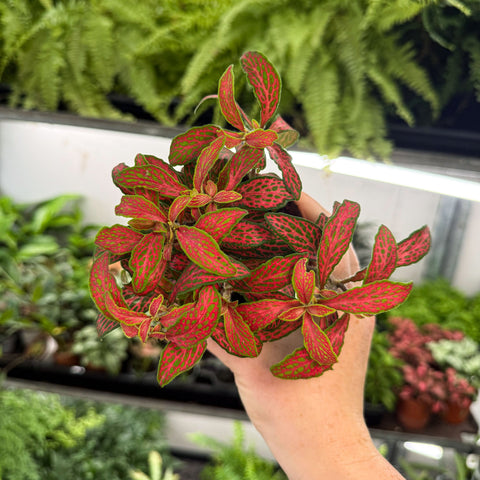
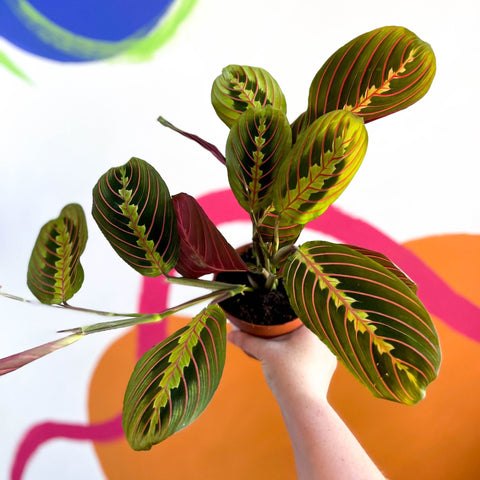
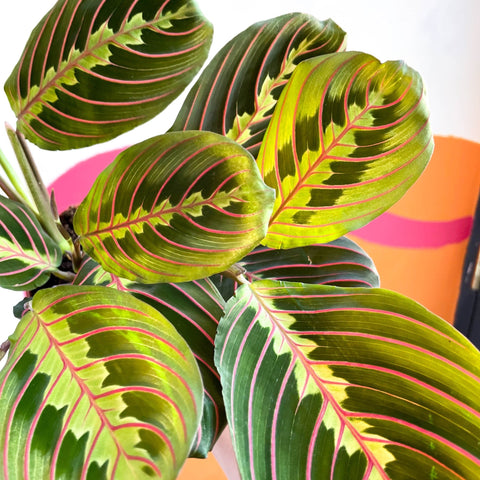
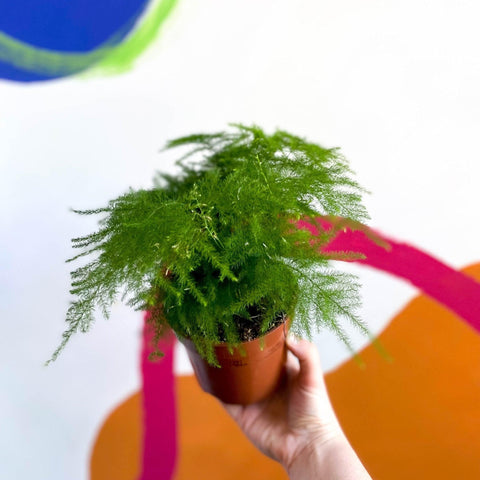
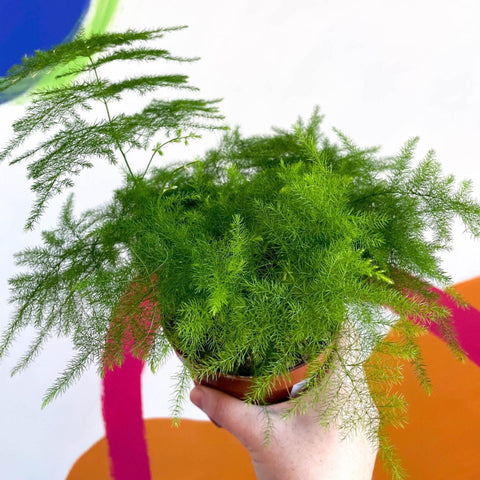
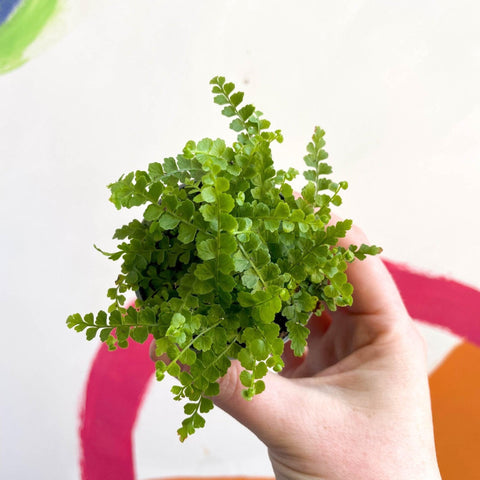
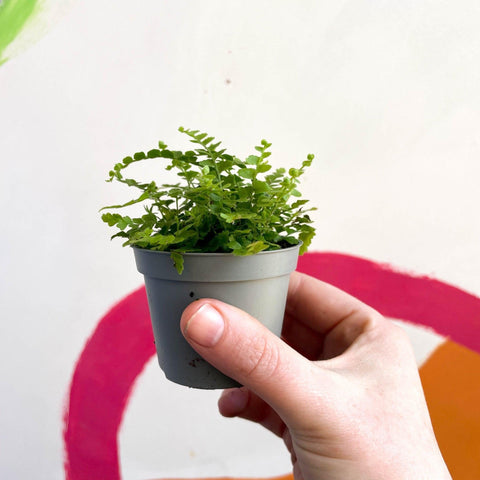
Nerve Plants are some of the most eye-catching plants we stock, with their bright variegations drawing comparisons to spiderwebs, riverbeds, nets and nerves. They like consistent levels of water and humidity and can thrive as terrarium plants as well as in their own pots. Each pot contains a small group of Fittonia plants which grow together to form a bushy mound of bright foliage with its nervous system of red, pink or white tracing.
Scientific Name
Fittonia (Fittons' plant)
Once classified as Gymnostachyum argyroneurum/ verschaffeltii, these plants were reclassified under the genus Fittonia as the species argyroneurum for those with white veins, and verschaffeltii for those with red or pink veins. They were then reclassified as the same species, Fittonia albivenis, after research published in a botanical journal in 1979, with two cultivar groups: Argyroneurum, with white veins, and Verschaffeltii, with pink or red veins.
Fitton in the name of this plant is in honour of Elizabeth and Sarah Mary Fitton, authors of the 19th century book 'Conservations on Botany'.
Common Name
White Nerve Plant, Mosaic Plant, Silver Fittonia, Silver Nerve, Silver Threads, Silver-net Plant, Snakeskin Plant, Nerve Plant
Origin
Native to tropical rainforests in South America, especially Columbia and Peru.
Descriptio
Light
Bright, indirect light works best; if you notice yellowing lower leaves on your Fittonia, it could probably do with a little more light.
Water
Water when the soil starts to dry out to keep it evenly moist. Be careful not to leave your Nerve Plant with soggy roots in a darker spot or in winter as this can cause issues. If they get a little too dry, nerve plants will wilt dramatically; if you keep an eye out for this and water as soon as you notice it, they should perk right back up!
Humidity
Fittonia will thrive with higher humidity, so consider misting or adding a pebble tray to help them stay hydrated. Misting occasionally will also help stop the leaves from getting dusty!
Soil
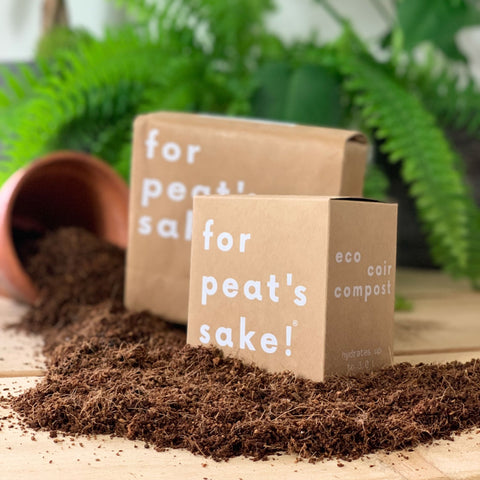
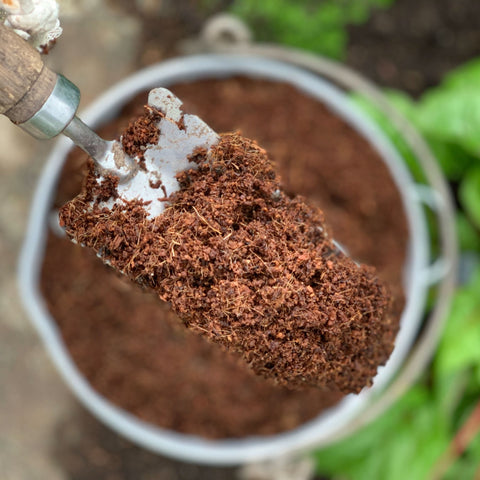
Use a well-draining but moisture-retentive soil, perhaps with added perlite or coir. A mix designed for Calatheas or Marantas works well here. Repot every few years as your nerve plants grow; they will grow faster in wide, shallow pots as they're used to creeping along the ground.
Food
Feed every three waters in the growing season, reduce to every four in autumn and winter. To protect the roots, water before fertilising!
Temperature
Ideal temperature is 18-24°C; make sure it does not get colder than 15°C in winter.
Pet-safe
Yes, but too much nibbling won't be good for pets, small humans or the plant!
Sprouts Top Tips
Keep an eye on your Fittonia's leaves for signs of over- or under-watering. Either way they will wilt; you can tell which issue you are having by checking the soil. If it is wet to the touch or when you squeeze the top slightly, it has been overwatered and needs to dry out; if the pot feels light and the soil bone dry it will need a good water.