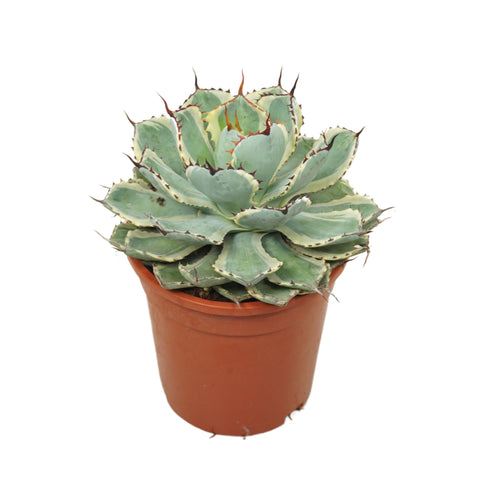
Agave potatorum ‘Variegata’ – Variegated Butterfly Agave
Mit Vertrauen einkaufen
Alles, was wir tun, ist darauf ausgelegt, Ihre Bestellung sicher und zu Ihrer Zufriedenheit zu liefern.
🌿 Sorgfältig verpackt in Bristol, UK
⭐ Geliebt von Tausenden zufriedener Sprouts Kunden
📦 Royal Mail Sendungsverfolgung
💚 Unabhängiger & Real Living Wage Arbeitgeber
Sollte Ihre Pflanze beschädigt oder in einem schlechten Zustand ankommen, werden wir das in Ordnung bringen. Erfahren Sie hier mehr
Jede Pflanze wird von unserem kleinen, pflanzenliebenden Bristol-Team sorgfältig in einer schützenden, größtenteils plastikfreien Verpackung verpackt.
Gelegentlich finden Sie wiederverwendete Luftpolsterfolie – diese wurde uns gespendet, und wir ermutigen Sie, sie ebenfalls wiederzuverwenden.
Bestellungen werden in der Regel innerhalb von 2–4 Werktagen verpackt und versandt. Gelegentlich kann es bei extremen Wetterbedingungen zu Versandverzögerungen kommen, um Ihre Pflanzen zu schützen. Die Gesundheit der Pflanzen hat bei uns immer Vorrang vor der Liefergeschwindigkeit.
Die Lieferung kostet 4,99 £ für beliebig viele Artikel oder ist ab einem Bestellwert von 60 £ kostenlos. Wir liefern nur innerhalb Großbritanniens.
Wir bieten auch lokale Fahrradlieferungen in Bristol für 4,99 £ über Pedal Collective an, eine sanftere Option für Pflanzen und den Planeten.
Wir glauben an eine faire Bezahlung, deshalb sind wir von Anfang an ein Arbeitgeber, der den Real Living Wage zahlt. Wir sind ein unabhängiges Unternehmen aus Bristol und verpacken jede Bestellung selbst.
Uns zu unterstützen bedeutet, faire Arbeit zu unterstützen.
Fragen vor der Bestellung? Schreiben Sie uns einfach eine Nachricht – wir helfen Ihnen gerne weiter.
Gehen Sie auf unsere Kontaktseite und füllen Sie das Kontaktformular aus. Einer unserer Mitarbeiter wird sich in Kürze bei Ihnen melden
Agave potatorum ‘Variegata’ is a striking architectural succulent admired for its beautifully patterned foliage and perfectly formed rosette. Its broad, fleshy leaves feature gorgeous shades of blue-green, creamy yellow and pale green, often edged with contrasting teeth and finished with a distinctive pointed tip. With its compact, symmetrical growth habit and sculptural appearance, this beautiful variegated Agave makes a wonderful statement plant for sunny windowsills, conservatories and sheltered outdoor spaces.
Scientific Name
Agave potatorum ‘Variegata’
Common Name(s)
Variegated Butterfly Agave, Butterfly Agave, Variegated Agave
Origin
A variegated cultivated form of Agave potatorum, a species native to the semi-arid regions of southern Mexico, particularly Oaxaca and Puebla. In its natural habitat, it grows in rocky, well-draining soils exposed to plenty of sunlight.
Light
Prefers very bright light with several hours of direct sunlight each day. A sunny south or west-facing windowsill, conservatory or sheltered outdoor position is ideal. Plenty of light helps maintain its compact rosette shape and beautiful variegation.
Introduce plants gradually to stronger sunlight, particularly after winter, as the lighter areas of the leaves can be more susceptible to scorching.
Water
Allow the soil to dry out completely between waterings, then water thoroughly and allow excess water to drain away. Agaves are highly drought-tolerant and store moisture in their thick, fleshy leaves.
Reduce watering significantly during autumn and winter, particularly when temperatures are cooler. Avoid allowing water to collect in the centre of the rosette for prolonged periods.
Humidity
Prefers low humidity and good airflow. Agaves are naturally adapted to dry environments and do not require misting or additional humidity. Avoid particularly damp or poorly ventilated conditions.
Soil
Use a very free-draining cactus and succulent mix with plenty of added mineral material such as pumice, grit or perlite. A mineral-rich growing medium helps prevent excess moisture accumulating around the roots.
Always use a pot with drainage holes to reduce the risk of root rot.
Food
Feed sparingly every 6–8 weeks during spring and summer with a diluted cactus and succulent fertiliser. Agaves are naturally adapted to nutrient-poor soils and require very little additional feeding.
Do not feed during autumn and winter.
Temperature
Prefers temperatures between 15–30°C but can tolerate warmer conditions with good airflow.
Although established Agave potatorum plants can withstand brief periods of cold when completely dry, variegated forms are best protected from frost. In the UK, keep indoors or in a frost-free greenhouse during winter, ideally above 5°C.
Pet-safe
No. Agaves contain irritating compounds that can cause digestive upset if ingested, and their sap may irritate sensitive skin. The sharp leaf tips and marginal teeth can also cause physical injury, so keep away from pets and children.
Sprouts Top Tips
The secret to a happy Agave is plenty of sunshine and excellent drainage. Give your ‘Variegata’ the brightest position available and allow the compost to dry completely before watering again.
Avoid touching the leaves unnecessarily, as their natural waxy coating helps protect them from strong sunlight and moisture loss.
Take care when handling or repotting, as the sharp terminal spines and toothed leaf margins can be surprisingly prickly!
Extras
Agave potatorum ‘Variegata’ develops a beautiful, symmetrical rosette of broad, sculptural leaves. Its compact growth habit makes it particularly suitable for container growing, although it can gradually become a substantial specimen over time.
The creamy-yellow variegation provides a striking contrast against the blue-green foliage, making each plant slightly different in appearance.
Like other Agaves, it is monocarpic, meaning each individual rosette flowers only once during its lifetime. Flowering generally occurs after many years, when the plant produces an impressive tall flower spike. Some plants produce offsets that can continue growing after the original rosette has flowered.
Did You Know?
The species name potatorum comes from the Latin word potator, meaning ‘drinker’, and refers to the traditional use of certain Agaves in the production of alcoholic drinks such as mezcal.
The common name Butterfly Agave comes from the plant’s beautifully arranged, broad leaves, which resemble the wings of a butterfly when viewed from above.
Topf & Pflegeutensilien hinzufügen
Die meisten Kunden kaufen zu dieser Pflanze noch einen Topf oder Erde hinzu.








Schauen Sie sich The Sprouts Blog an
Sprouts Insights zu Zimmerpflanzen, Gartenarbeit, unseren Lieblingsmarken und Fallstudien zur Pflanzenvermietung.