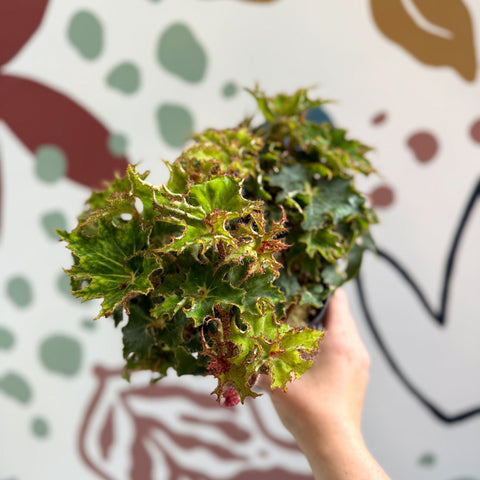
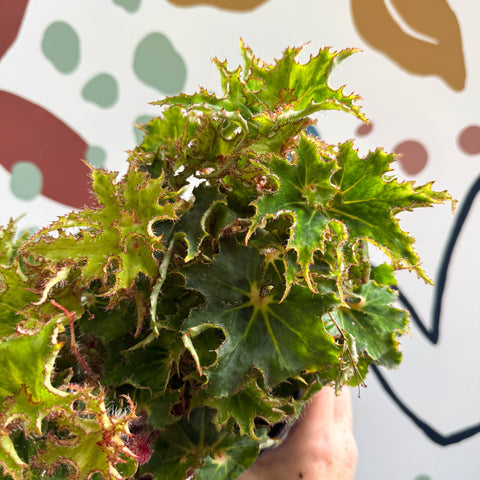
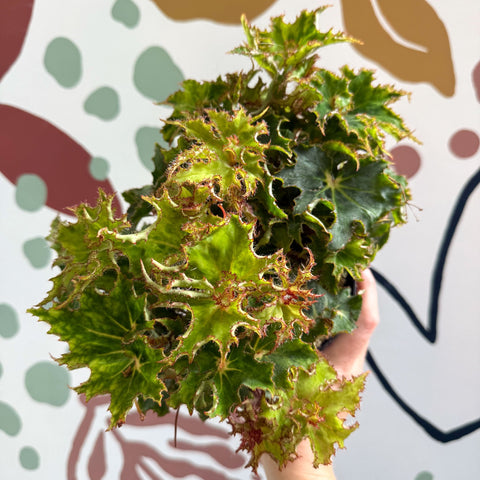
Als schillernde Blattschmuckpflanze weist Begonia rex „Sea Urchin“ spiralförmige, gezackte Blätter in den Metallic-Tönen Silber, Tiefgrün und Burgunderrot auf. Die Textur und Farbe der Blätter ähneln den Stacheln und wechselnden Farbtönen eines Seeigels, was diese Sorte zu einer der auffälligsten in der Begonia rex-Gruppe macht. Obwohl sie hauptsächlich wegen ihrer Blätter angebaut wird, kann sie unter den richtigen Bedingungen kleine rosa Blüten hervorbringen.
Wissenschaftlicher Name
Begonia rex „Sea Urchin“ (vom lateinischen rex, was „König“ bedeutet und auf das königliche Aussehen des Laubs verweist)
Begonia rex-Sorten stammen von Begonia rex-Hybriden ab, die Mitte des 19. Jahrhunderts ursprünglich aus Assam, Indien, eingeführt wurden. „Sea Urchin“ ist eine Zuchtsorte, die wegen ihres Spiralwachstums und ihrer dramatischen Färbung gezüchtet wurde.
Gängige(r) Name(n)
Königsbegonie, Blattbegonie, Seeigel-Begonie
Herkunft
Sorte, die aus Arten entwickelt wurde, die im Nordosten Indiens und den umliegenden Regionen beheimatet sind
Licht
Bevorzugt helles, indirektes Licht. Zu viel Sonne verbrennt die Blätter; zu wenig kann ihre Farben trüben. Nord- oder Ostfenster sind ideal.
Wasser
Gießen Sie, wenn die oberste Erdschicht trocken ist. Halten Sie die Erde leicht feucht, aber niemals durchnässt. Reduzieren Sie das Gießen im Winter und vermeiden Sie, dass Wasser auf den Blättern oder der Krone steht.
Luftfeuchtigkeit
Gedeiht bei mäßiger bis hoher Luftfeuchtigkeit, verträgt aber kein direktes Besprühen. Verwenden Sie ein Kieselsteintablett oder stellen Sie sie in die Nähe eines Luftbefeuchters, um eine gleichmäßige Feuchtigkeit in der Luft zu gewährleisten.
Erde
Mag eine leichte, luftige Mischung – eine Mischung aus Zimmerpflanzenerde mit zusätzlichem Perlit und Blatterde oder feiner Rinde. Achten Sie auf eine ausgezeichnete Drainage. Alle 1–2 Jahre im Frühjahr umtopfen.
Dünger
Alle 4–6 Wochen im Frühjahr und Sommer mit einem verdünnten, ausgewogenen Flüssigdünger düngen. Zu viel Dünger kann zu einem vergeilten Wachstum führen.
Temperatur
Bevorzugt 18–24 °C. Kälteempfindlich – vermeiden Sie Temperaturen unter 15 °C und halten Sie sie von Zugluft fern.
Haustiersicher
Giftig bei Einnahme – außerhalb der Reichweite von Haustieren und Kindern aufbewahren.
Sprouts Top-Tipps
Regelmäßig drehen, damit die Pflanze gleichmäßig wächst und die Krone vor Überwässerung geschützt wird. Wenn die unteren Blätter abfallen, prüfen Sie auf Überwässerung oder Kältestress.
Extras
Sie können Blattschnitte in feuchter Erde oder Wasser vermehren – sogar ein einzelnes Blatt mit einer Ader kann zu einer neuen Pflanze heranwachsen.
Wussten Sie schon?
Das wirbelnde Zentrum und die gezackten Ränder von „Sea Urchin“ ähneln der Form und Textur von Seeigeln, was dieser Sorte ihren einprägsamen Namen gab.