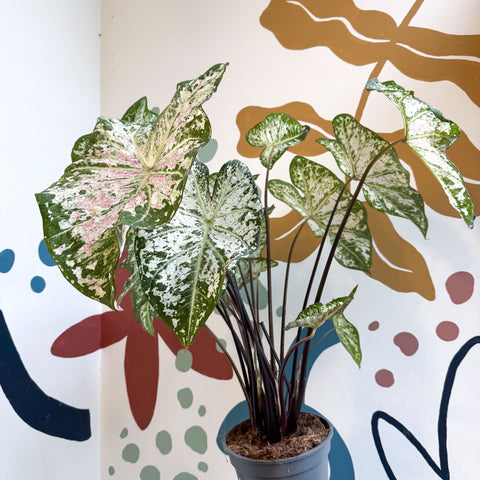
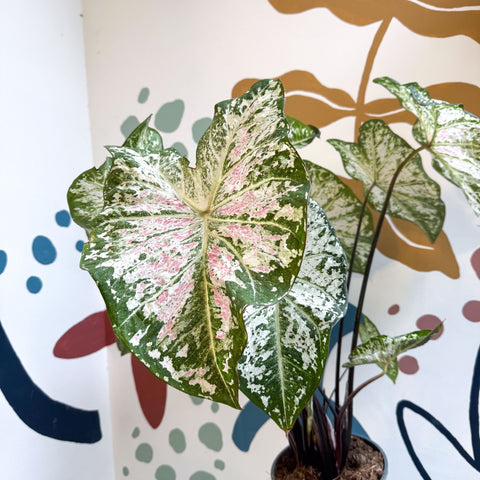
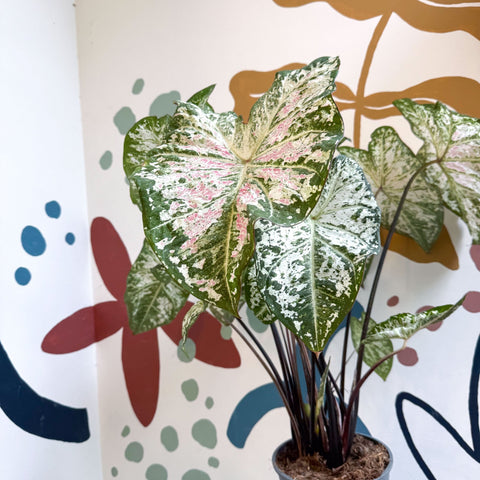
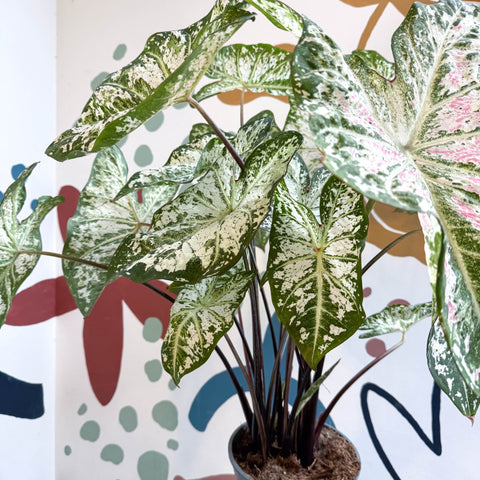
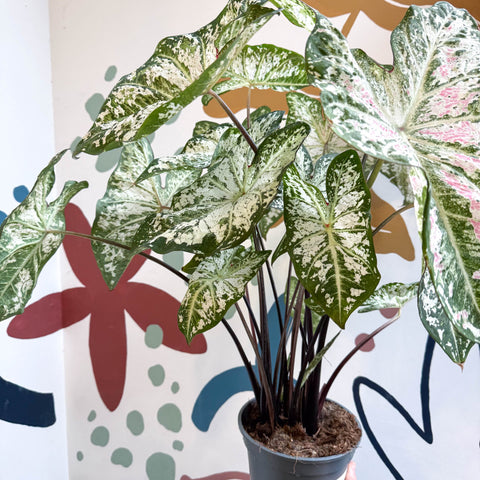
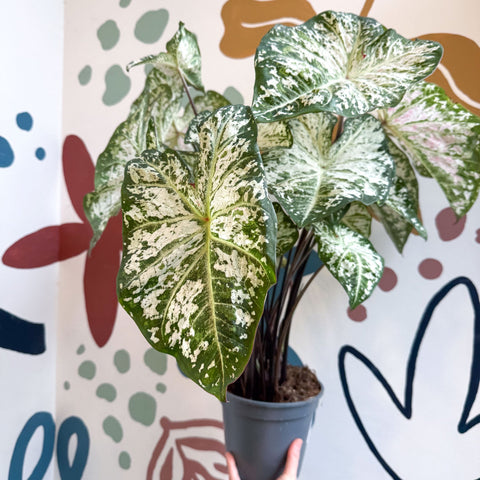
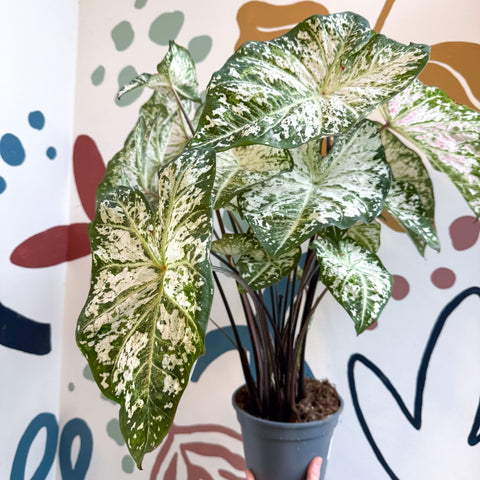
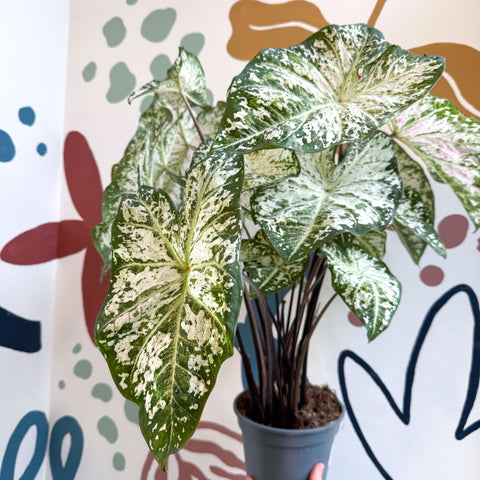
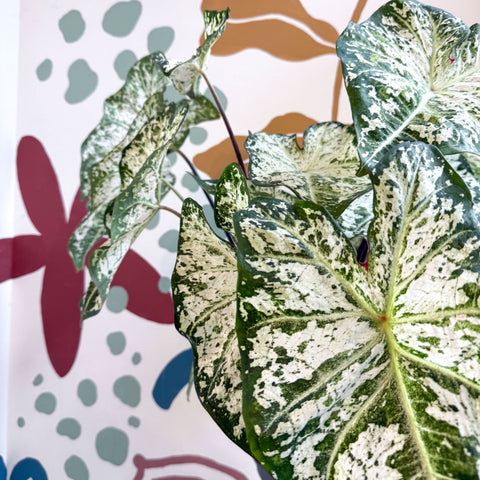
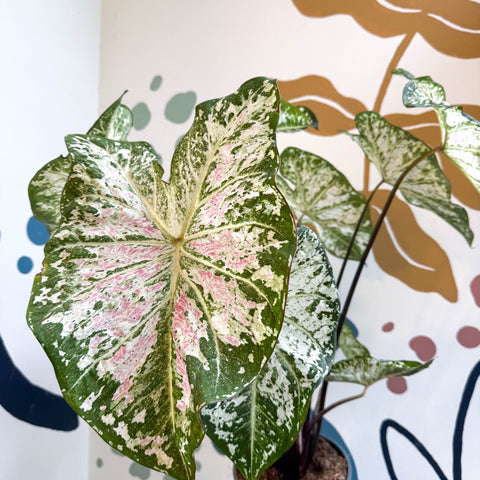
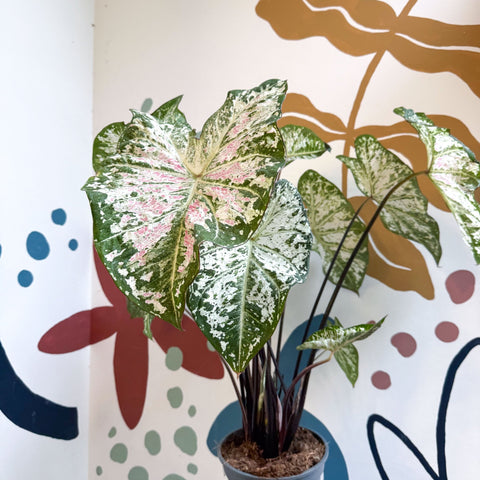
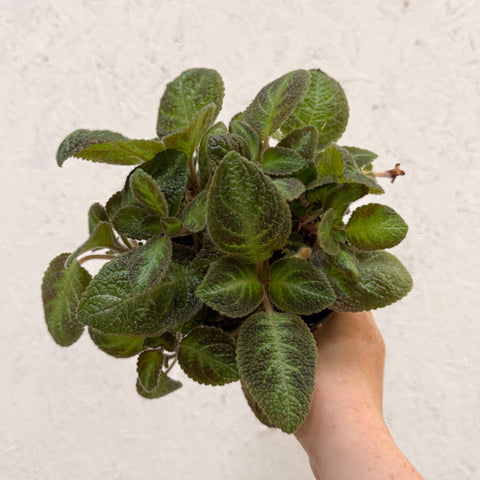
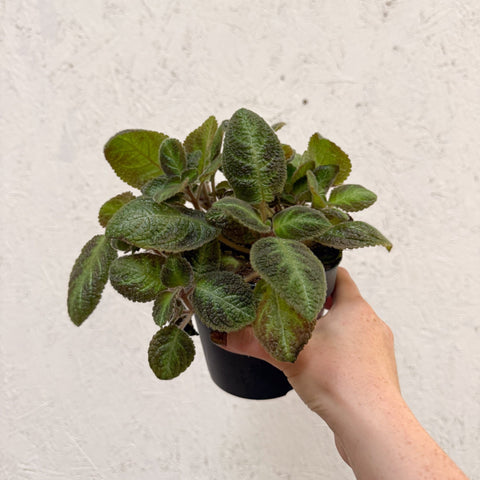
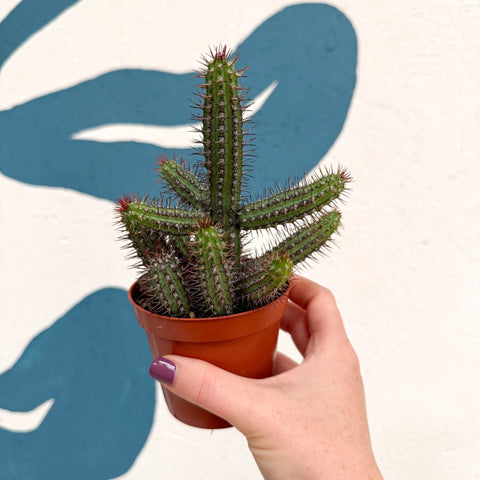
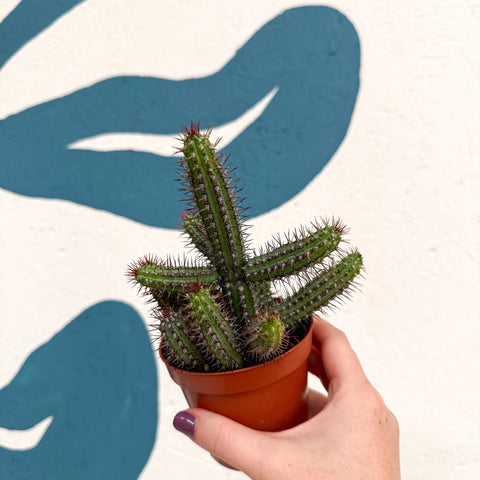
Caladium ‘Snow Flurry’ ist eine atemberaubende Fancy-Leaf-Sorte mit knackig weißen Blättern, die am Rand und den Blattadern zart grün sind. Ihr frostiges, fast durchscheinendes Laub bringt Helligkeit in schattige Ecken im Haus und ist ein auffälliges Merkmal in sommerlichen Töpfen oder Beeten im Freien. Mit ihrem eleganten Kontrast und luftigen Aussehen verleiht dieses weiße Caladium jeder Pflanzensammlung eine erfrischende Note.
Wissenschaftlicher Name
Caladium bicolor ‘Snow Flurry’ (zweifarbiges Keladi-Pflanze, Sorte: Snow Flurry)
Reklassifizierung oder Namensgeschichte
Wie die meisten Zier-Caladien wird „Snow Flurry“ als eine Sorte von Caladium bicolor klassifiziert. Der Gattungsname stammt vom malaiischen keladi ab, was Taro bedeutet.
Gebräuchliche(r) Name(n)
Elefantenohr, Herz Jesu, Engelsflügel, Weißes Caladium
Herkunft
Kultivierte Sorte, abgeleitet von Arten, die im Amazonasbecken in Südamerika, insbesondere Brasilien, heimisch sind.
Licht
Bevorzugt helles, indirektes Licht im Innenbereich. Ein wenig sanfte Morgen- oder Abendsonne im Herbst und Winter ist vorteilhaft, aber vermeiden Sie harte Sommerstrahlen, die die zarten weißen Blätter versengen können. Im Freien wählen Sie einen schattigen oder halbschattigen Platz.
Wasser
Halten Sie die Erde während der Wachstumsperiode gleichmäßig feucht und gießen Sie, wenn das obere Drittel ausgetrocknet ist. Reduzieren Sie das Gießen im Herbst und Winter, wenn das Wachstum langsamer wird oder die Pflanze in die Ruhephase eintritt. Vermeiden Sie Staunässe, um die Knollen zu schützen.
Luftfeuchtigkeit
Liebt hohe Luftfeuchtigkeit. Regelmäßig besprühen, auf ein Kieselbett stellen oder in die Nähe eines Luftbefeuchters stellen, um ein Braunwerden der Blattränder zu verhindern.
Erde
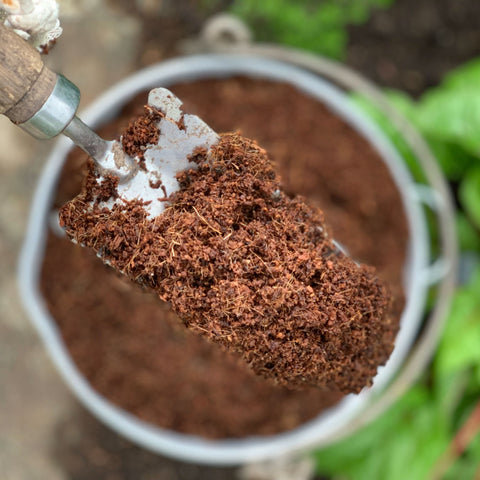
Verwenden Sie eine feuchtigkeitsspeichernde, aber gut durchlässige Mischung. Eine reichhaltige, organische Erdmischung funktioniert gut. Falls erforderlich, alle 2–3 Jahre im Frühjahr umtopfen.
Düngung
Während der Wachstumsperiode alle 4 Wassergaben mit einem ausgewogenen Dünger düngen, im Herbst und Winter auf alle 6 reduzieren.
Temperatur
Zwischen 18–30 °C halten. Unter 15 °C verlangsamt sich das Wachstum, und die Pflanze kann unter kühleren Bedingungen in die Ruhephase eintreten. Vor Temperaturen unter 10 °C schützen.
Haustiersicher
Nein – Caladium ‘Snow Flurry’ ist bei Einnahme durch Haustiere oder Menschen giftig.
Sprouts Top-Tipps
Die zarten weißen Blätter von „Snow Flurry“ sind besonders reizvoll, wenn sie mit Zimmerpflanzen mit dunklerem Laub kontrastiert werden. Wie alle Caladien zieht sie sich im Herbst und Winter natürlich zurück. Lagern Sie die Knollen an einem trockenen, dunklen Ort und pflanzen Sie sie im Frühjahr für eine weitere Saison mit schneeweißem Wachstum neu ein.