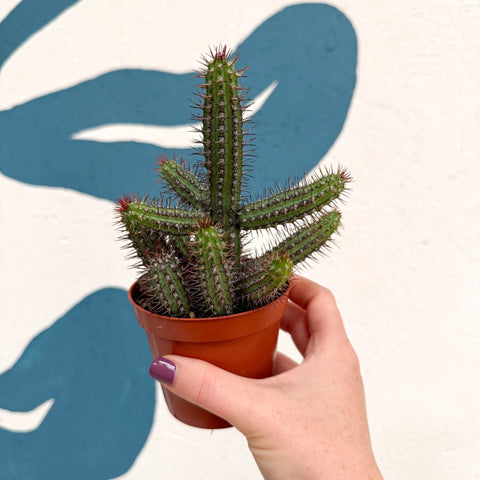
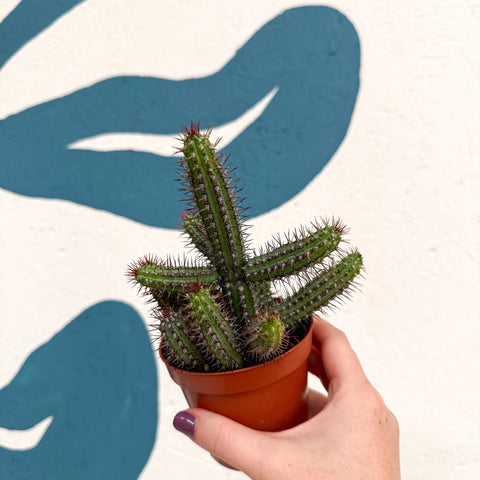
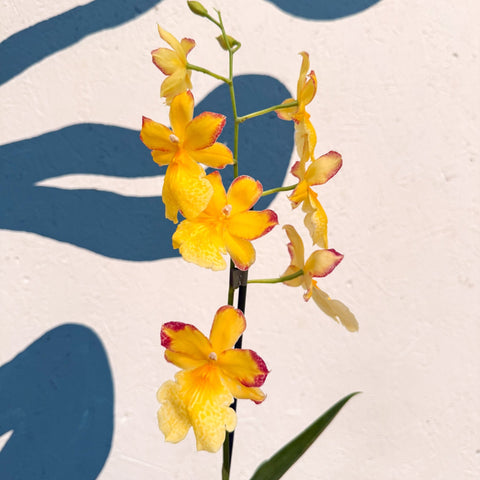
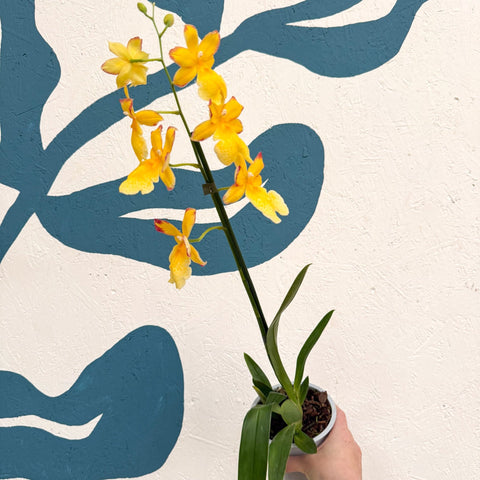
Paphiopedilum-Hybriden des Maudiae-Typs sind markante und zuverlässige Frauenschuh-Orchideen, die wegen ihrer glänzenden, symmetrischen Blüten und ihres wunderschön gesprenkelten Laubs geschätzt werden. Diese Form bringt grüne und violette Blüten mit zarten Schattierungen und starken Kontrasten hervor, die ein architektonisches, langlebiges Arrangement bilden. Im Gegensatz zu vielen Orchideen sind Paphiopedilums terrestrisch und nicht epiphytisch, was sie pflegeleichter und gut für den Innenanbau geeignet macht.
Wissenschaftlicher Name
Paphiopedilum (Maudiae-Typ-Hybride)
Paphiopedilum-Orchideen vom Maudiae-Typ sind keine einzelne Art, sondern eine breite Hybridgruppe, die ursprünglich von Arten wie Paphiopedilum callosum und Paphiopedilum lawrenceanum abstammt. Die überwiegende Mehrheit wird aus Samen und nicht durch Klonen gezogen, was bedeutet, dass einzelne Pflanzen in Farbe, Muster und Zeichnung leicht variieren können. Eine weitere Identifizierung über „Maudiae-Typ-Hybride“ hinaus ist daher in der Regel nicht zuverlässig.
Synonyme
Paphiopedilum Maudiae-Gruppe
Gängiger Name
Frauenschuh-Orchidee
Herkunft
Hybridenherkunft. Die Elternarten stammen aus Südostasien, wo Paphiopedilums terrestrisch auf Waldböden in warmen, feuchten Umgebungen wachsen.
Licht
Bevorzugt helles, indirektes Licht oder Halbschatten. Direkte Sonneneinstrahlung vermeiden, da diese die Blätter verbrennen kann. Das Laub sollte ein gesundes Mittelgrün aufweisen; sehr dunkle Blätter können auf unzureichendes Licht hindeuten.
Wasser
Das Substrat gleichmäßig feucht, aber nicht durchnässt halten. Die oberste Schicht des Substrats zwischen den Wassergaben leicht antrocknen lassen. Im Winter die Bewässerung leicht reduzieren, aber die Pflanze niemals vollständig austrocknen lassen.
Luftfeuchtigkeit
Bevorzugt mittlere bis hohe Luftfeuchtigkeit. Gedeiht gut in Küchen, Badezimmern oder in der Nähe eines Kiesbetts. Direkte Besprühung der Blattkrone vermeiden.
Erde
Eine spezielle Paphiopedilum- oder feine Orchideenrindenmischung verwenden, die Feuchtigkeit speichert und gleichzeitig gut entwässert. Alle 1–2 Jahre umtopfen, idealerweise nach der Blüte.
Düngung
Während der Wachstumsperiode alle 3–4 Wassergaben mit einem verdünnten Orchideendünger düngen. Im Winter die Düngung deutlich reduzieren.
Temperatur
Bevorzugt mittlere Bedingungen. Der ideale Temperaturbereich liegt zwischen 15 und 24 °C. Temperaturen unter 12 °C vermeiden und vor kalter Zugluft schützen.
Haustiersicher
Ungiftig. Gilt als sicher für Haustiere und Kinder.
Sprouts Top-Tipps
Konstante Pflege ist der Schlüssel – gleichmäßiges Licht, gleichmäßige Feuchtigkeit und stabile Temperaturen führen zu den besten Blühergebnissen.
Zusätzliches
Jeder Trieb blüht einmal, aber neue Triebe entwickeln sich an der Basis und produzieren zukünftige Blüten.
Wussten Sie schon?
Maudiae-Typ-Paphiopedilums wurden gezüchtet, um die auffälligen Blüten wilder Arten mit zuverlässiger Blüte und einfacherer Pflege in Innenräumen zu kombinieren.