Scientific Name
Euphorbia pulcherrima (Euphorbus' most beautiful plant)
Common Name
Poinsettia, Flor de Pascua (Flower of Easter), Christmas flower, Christmas star
Origin
Native to Central America, especially S. Mexico
Description
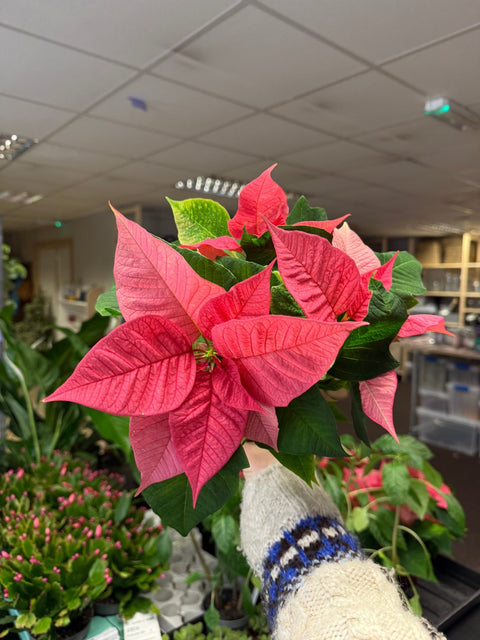
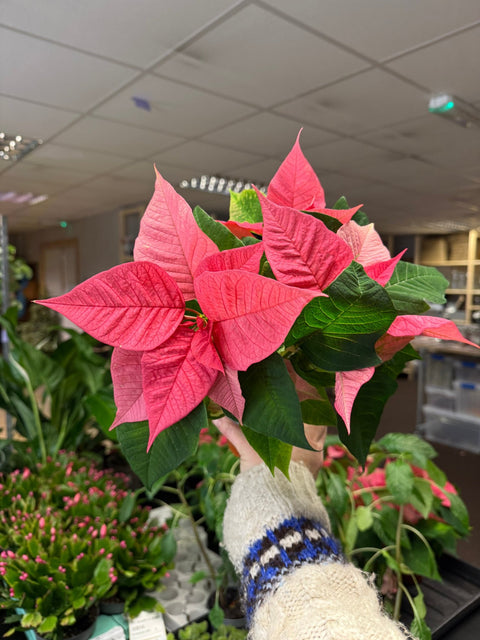
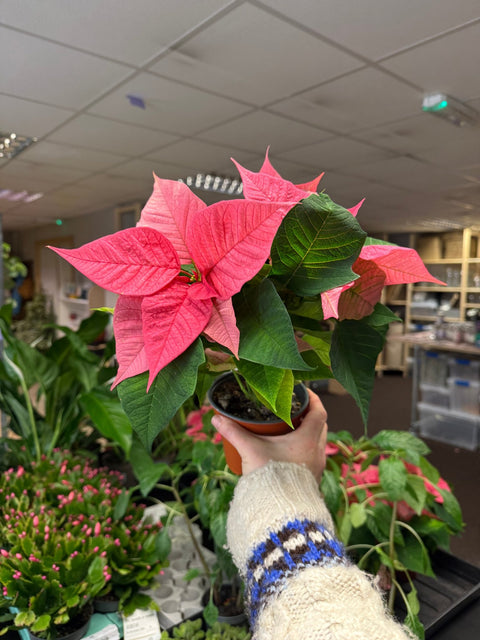
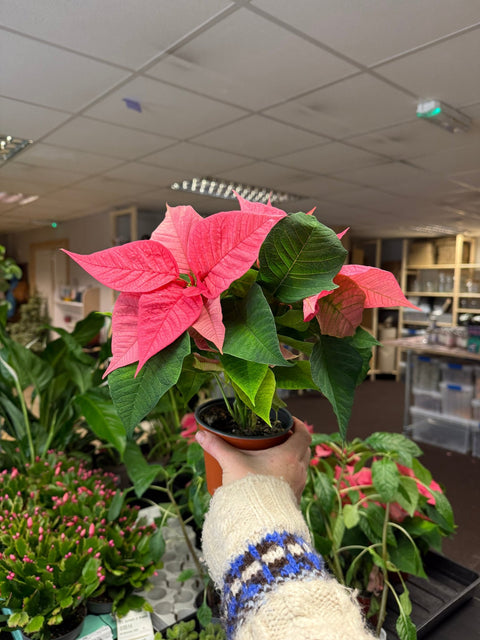
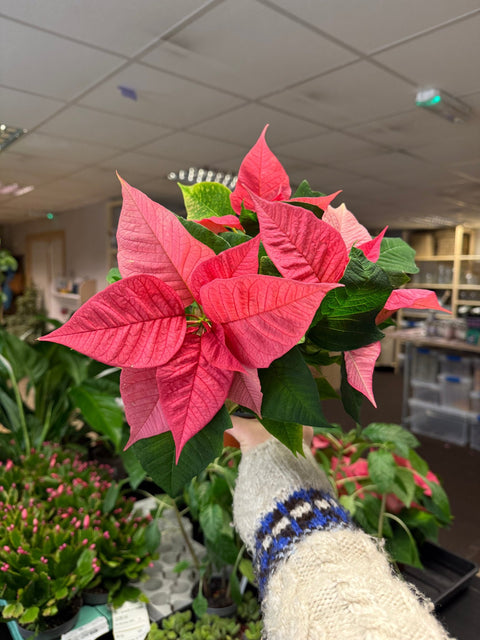
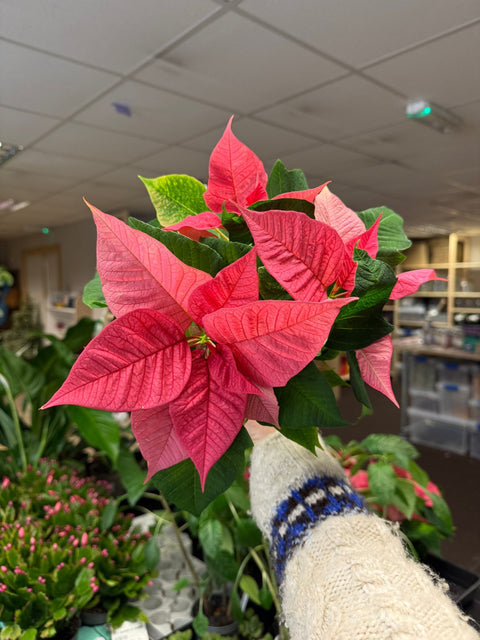
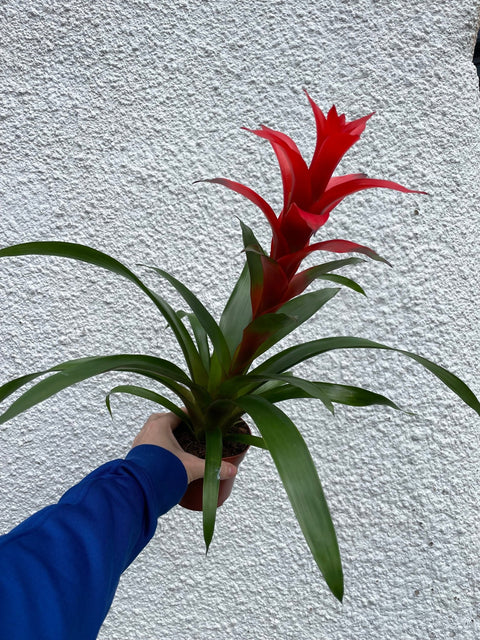
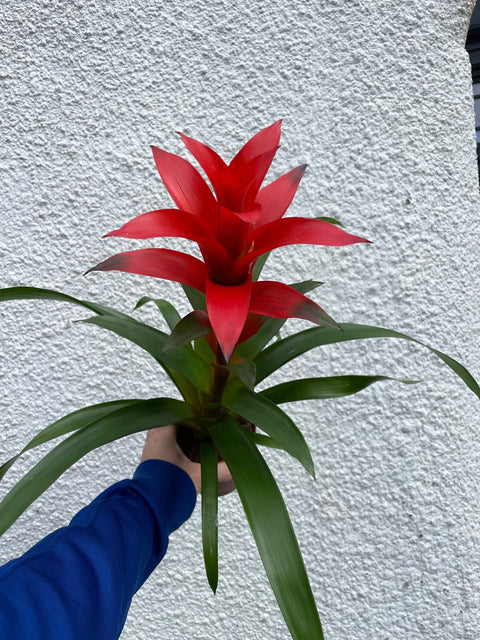
The Poinsettia's Latin name really hits the mark! Its striking colouring is found not in flowers but in the bright leaves (a specialised type of leaf known as a 'bract') which surround the much smaller flowers. Ranging from bright red to pale pink to whit to a mixture of the two, it is the poinsettia's colouring which has earned it a place at the heart of the Christmas season. They became associated with the season thanks to their resemblance to stars and have remained a winter staple thanks to their stunning colour and beauty. What better centrepiece could there be for your table heaving with food or surrounded by leftovers? And the best part is, with the right care, this one can last until next year and beyond!
Light
Bright, indirect light is best, and your poinsettia will appreciate a splash of morning or evening sun too! DORMANCY: Keep it in a bright setting through spring and early summer. To get it to flower again in December, make sure it gets 15 hours of darkness (eg by placing it in a box or under a blanket) from August until mid-November; once the leaves start to redden, gradually increase the amount of light it gets to mimic the start of spring!
Water
Keep your poinsettia's soil moist- only let the top quarter dry out between waters, and use lukewarm water to avoid shocking it. Over-watering is common; don't let your plant sit in soggy soil! DORMANCY: Increase waters slightly towards the end of spring (mimicking the end of summer), make sure it is not overwatered and soggy whilst in its dark room/box for longer periods, and increase watering again as you increase light once the leaves start to redden.
Humidity
Average humidity is fine, as long as your house is not overly dry and the plant isn't too near a radiator.
Soil
Use a well-draining, moisture-retentive houseplant soil. Repot every two years as the plant grows, and add grit or perlite of it's in a darker location to downplay over-watering
Food
Fertilise every four waters in autumn and winter using a 'flowering plant' fertiliser. DORMANCY: Use a 'houseplant' fertiliser from early spring to late summer, and reduce to every 6 waters.
Temperature
Ideally between 15-25°C. DORMANCY: Temperature can be reduced to 12°C during the spring for its dormancy period; don't let it get below 15°C while flowering.
Pet-safe
No, this plant is toxic to pets and small humans.
Sprouts Top Tips
To get your poinsettia flowering and with its striking leaf colour in winter, follow the dormancy instructions, and prune off the colourful leaves at the start of spring. If you just want to keep your plant and don't mind when it flowers, that's fine too! It will follow our seasons and bloom in spring instead- hence the Spanish name 'Easter Flower'! The advice on watering, light and fertilising in dormancy periods will be applicable in our autumn/winter in that case.
Did you know?
There are around 100 different varieties of poinsettia now, with varying colours and patterns.