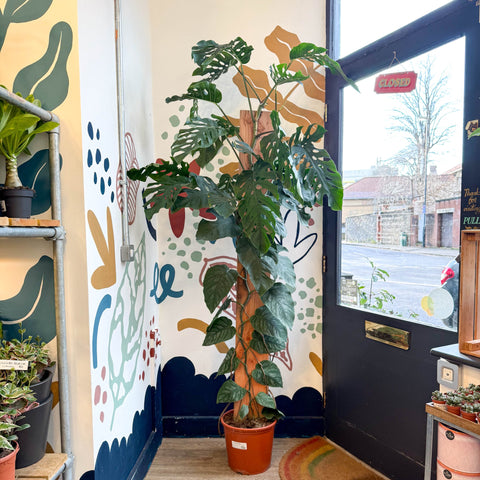
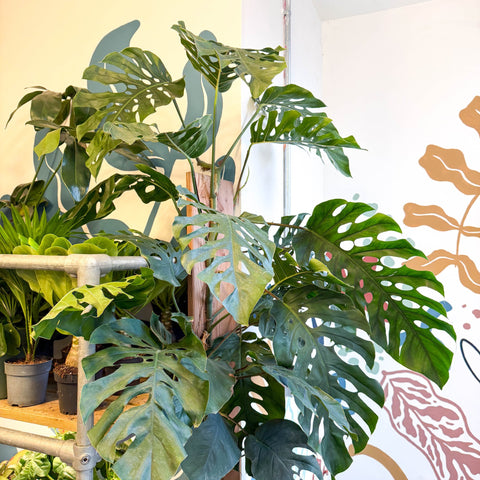
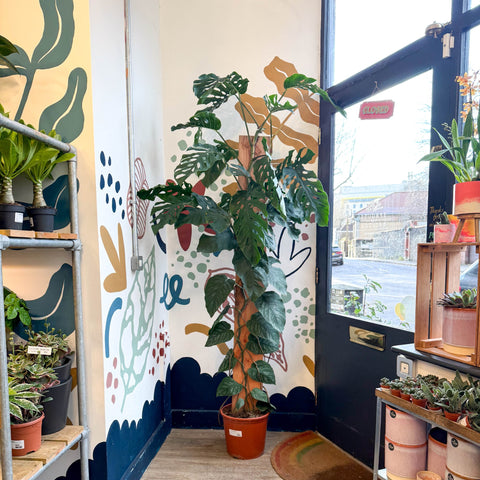
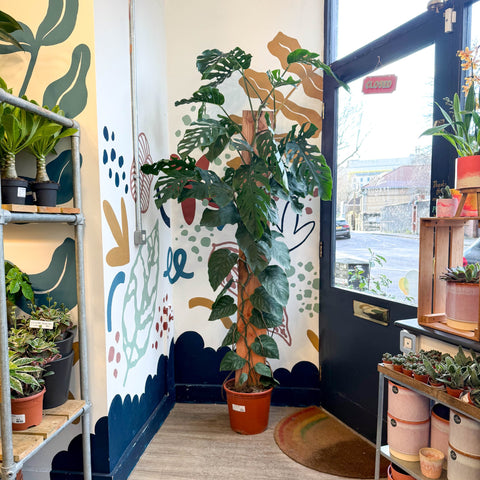
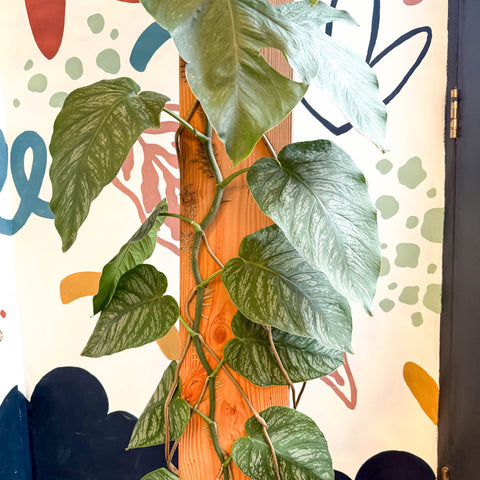
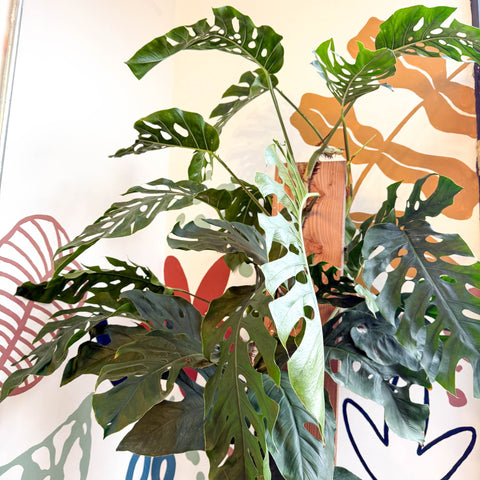
This stunning plant can grow to gigantic size, but it starts off small with its heart-shaped, silver-green leaves growing flat to the surface it grows against (whether that is a tree, a climbing support or itself), looking like roof shingles and giving it its common name. As the plant matures, it sprouts even larger leaves with the fenestrations so characteristic of the Monstera genus. So if your Shingle Plant is growing huge leaves with holes in, you know you're looking after it right! A real statement plant, this one will really grow on you as it flourishes in your home - and if you're not quick enough, it might literally grow on you like it would an Amazonian tree.
Scientific Name
Monstera dubia (doubtful monster)
Synonyms: Marcgravia dubia, Monstera acreana, Monstera irritans, Monstera gigantea
This plant was originally cultivated in 19th Century Europe as Marcgravia dubia before it was identified as an Aroid, and its current name was first published in 1914.
Common Name(s)
Shingle Plant, Dubia Monstera
Origin
Native to tropical rainforests of Central & South America, where it climbs tree trunks.
Light
Thrives in bright, indirect light. Avoid direct sunlight, as it can scorch the leaves. Ideally, keep it near an east- or north-facing window or use a grow light for consistent lighting.
Water
Keep the soil consistently moist but not waterlogged. Water when the top third of the soil feels dry. Reduce watering in winter, allowing the soil to dry out slightly more between waterings. Avoid letting the plant sit in standing water, as this can lead to root rot. If your Monstera is growing up a moss pole or plank, it will benefit from misting the aerial/adventitious roots to keep them happy and hydrated
Humidity
This rainforest plant thrives best in above-average humidity, preferably over 60%. Use a pebble tray or humidifier to increase the moisture in the air around this plant in drier air. Crispy, brown leaf tips are a sign that the air may be too dry.
Soil
A well-draining potting mix designed for Monstera or Philodendrons will work well here. This epiphytic aroid will appreciate a combination of coir, perlite and bark to balance soil aeration and moisture. Repot every few years as the plant grows.
Food
Feed every four waters in the growing season (spring and summer), reduce to every six in autumn and winter. Use a balanced, water-soluble fertiliser.
Temperature
Ideal temperature is 18-30°C; make sure it does not get colder than 15°C in winter, and protect from cold draughts or air-conditioning vents.
Pet-safe
No, this plant is toxic if ingested. Keep it out of reach of pets and children.
Sprouts Top Tips
Provide a support structure like a moss pole or trellis for the plant to climb, as this mimics its natural growth habit and encourages healthy, larger leaves. Wipe the leaves occasionally with a damp cloth to remove dust and help maintain good levels of photosynthesis.
Did You Know?
This Monstera's shingling growth pattern helps it absorb light more efficiently in the dappled light of the rainforest.