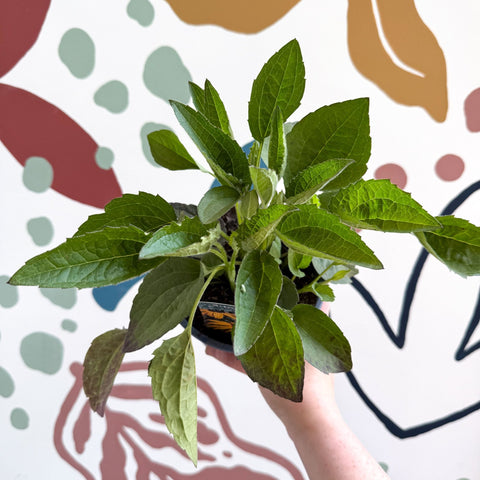
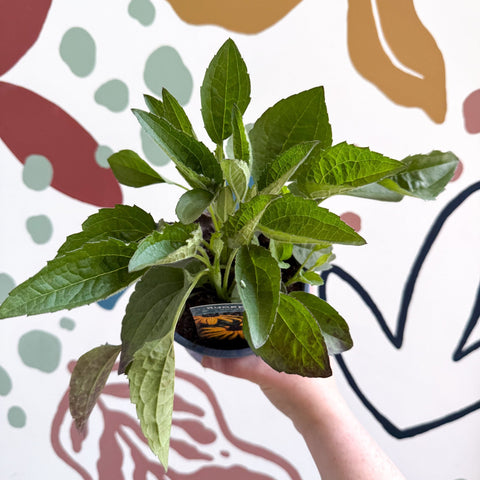
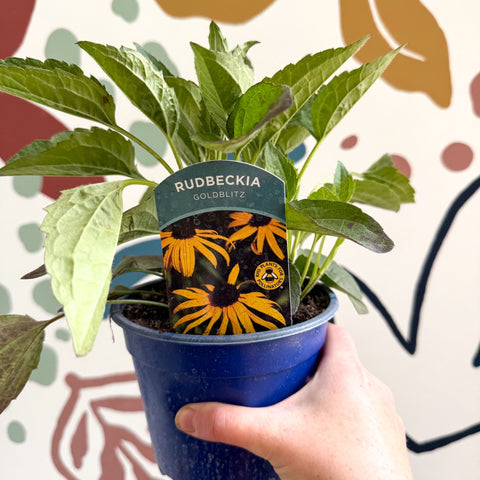
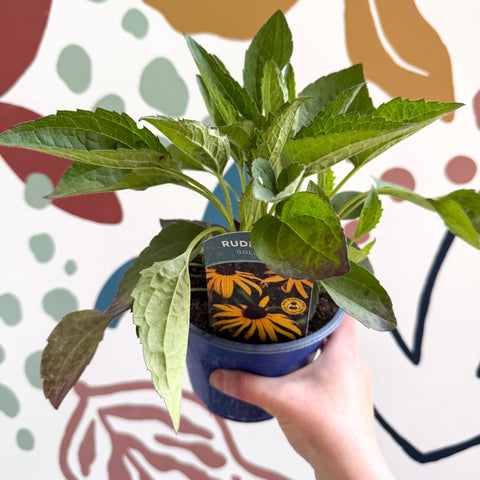
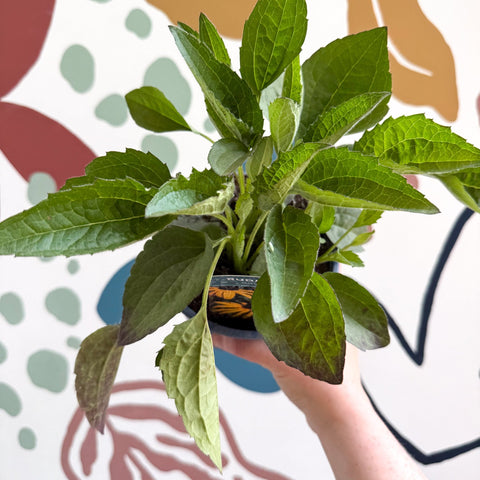
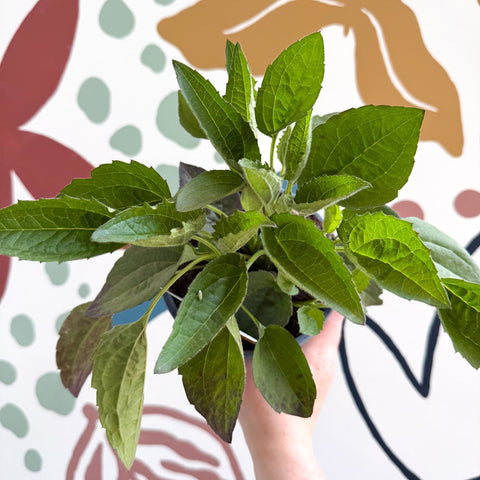
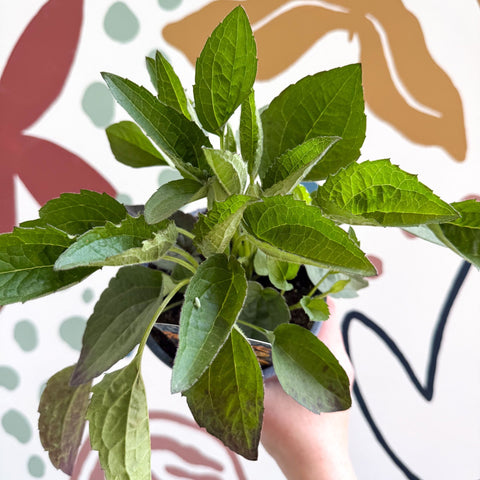
Tall, golden flowers, you say? How about the Rudbeckia! These bright golden blooms with cone-shaped centres crown stems up to 60cm tall. Hardy throughout the UK down to -20°C.
If you want a sunflower aesthetic with slightly less overwhelming height and slightly more coming back next year, this might be the perfect plant for you. Rudbeckia also love the sun, and this variety grows its golden flowers on top of tall stems- they can get up to 60cm tall! Their distinctive flowers have cone-shaped centres and can grow to 12cm across, and between flowers you can admire its lush green foliage too. It has even won the prestigious Award of Garden Merit from the RHS. This plant is easy care, being able to grow tall without staking and not spreading so fast that it needs to be divided lots. Choose this plant to fill a sunny spot with golden colour, and enjoy their beauty year after year as this perennial returns to your garden.
Perennial
|
Flowers: tall, clump forming
|
Foliage Spring till autumn, can provide winter structure if not cut back in autumn, flowers August to October.
|
Scientific Name
Rudbeckia fulgida var. sullivantii 'Goldsturm' (Rudbecks' shining plant, variety: Sullivant's variety, cultivar: golden storm)
Common Name
Black-Eyed Susan, Coneflower, Goldsturm Black-Eyed Susan
Origin
Native to North America, but this was first introduced in Germany.
Pruning Tips
Deadhead regularly. Can cut back in autumn but stems and seedheads can look great over winter if left, and provide feed for birds too!
Wildlife Value
One of the RHS' Plants for Pollinators, this plant's flowers are rich in nectar and pollen. It is known for attracting bees, amongst other pollinators. If you leave the seedheads over winter, they can provide forage for birds.
Positioning
This plant does best in full sun but can take partial shade. A spot facing south, east or west will work well. It can grow in both exposed and sheltered areas.
Water
When your Rudbeckia has got used to your garden, it is drought tolerant, so shouldn't need extra watering unless it's ridiculously dry weather.
Soil
Moist, well-draining soil is the key! Any type of soil can work with this plant as long as it won't be sat in a puddle, but it likes a heavy soil best.
Food
This Rudbeckia likes its soil fertile and rich in organic matter. Mulch annually, adding compost around the base of this plant to keep it happy and well-nourished.
Pet-safe
Yes- no toxicity reported, though it's best for the plant and your pets if they don't nibble too much!
Sprouts Top Tips
With many outdoor plants, finding the right spot is key- the rest can take care of itself! This Rudbeckia is no exception. The main things to keep track of are:
1) adding compost to the soil around the plant in autumn (known as 'mulching') to keep it well-fed.
2) deadhead spent flowers to encourage it to bloom again and again- it can keep going into October!
3) every few years, it's a good idea to divide bigger clumps of flowers to keep them healthy and encourage them to grow. Otherwise you can basically let these plants do their thing!