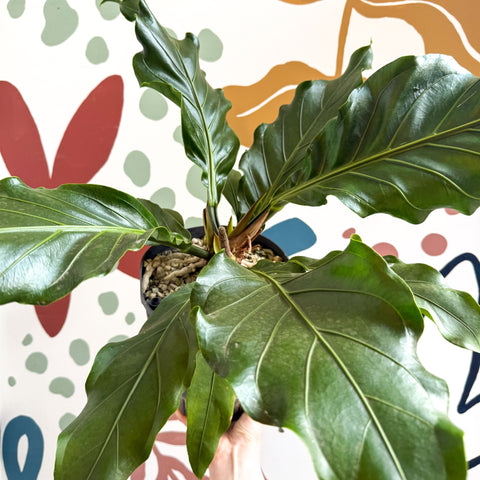
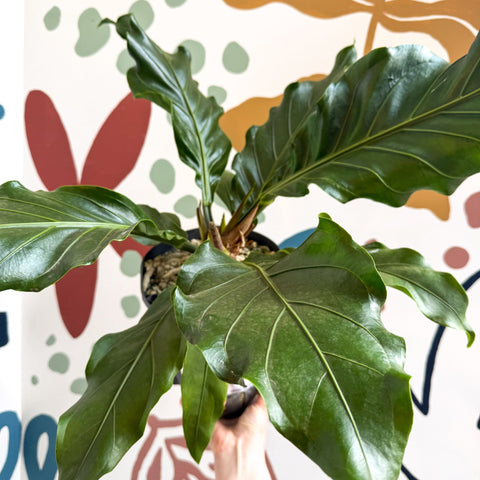
With its broad, glossy leaves and distinctive bird’s nest growth habit, Anthurium crassinervium ‘Karma Birdnest’ brings a touch of tropical elegance to any indoor space. This cultivar is prized for its robust foliage and architectural form, making it a standout addition to your plant collection.
Scientific Name
Anthurium crassinervium ‘Karma Birdnest’
(crassinervium = “thick veins,” referencing the prominent leaf venation)
Common Name
Bird’s Nest Anthurium, Karma Birdnest Anthurium
Origin
Native to the tropical regions of northern South America and parts of the Caribbean, where it thrives in humid, shaded environments.
Light
Prefers bright, indirect light. Avoid direct sunlight, which can scorch the leaves. Suitable for placement near east or north-facing windows.
Water
Maintain consistently moist soil, allowing the top inch to dry out between waterings. Reduce watering frequency during the winter months.
Humidity
Thrives in high humidity environments. Aim for humidity levels above 60%. Use a humidifier, pebble tray, or regular misting to maintain moisture levels.
Soil
Use a well-draining, airy mix rich in organic matter. A blend of orchid bark, perlite, and peat moss or coco coir works well to mimic its natural epiphytic conditions.
Food
Feed monthly during the growing season (spring and summer) with a balanced, water-soluble fertilizer diluted to half strength. Reduce feeding in autumn and winter.
Temperature
Prefers temperatures between 18–26°C. Protect from cold drafts and avoid temperatures below 15°C.
Pet-safe
No – Anthurium species are toxic if ingested by pets or humans.
Sprouts Top Tips
Provide a moss pole or trellis to support its climbing nature. Regularly wipe leaves with a damp cloth to remove dust and enhance photosynthesis. Repot every 2–3 years to refresh the soil and accommodate growth.