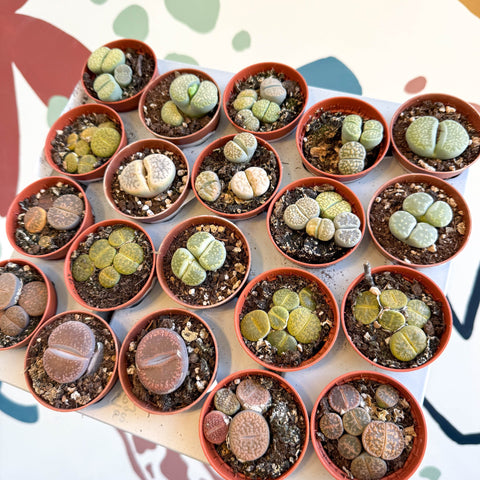
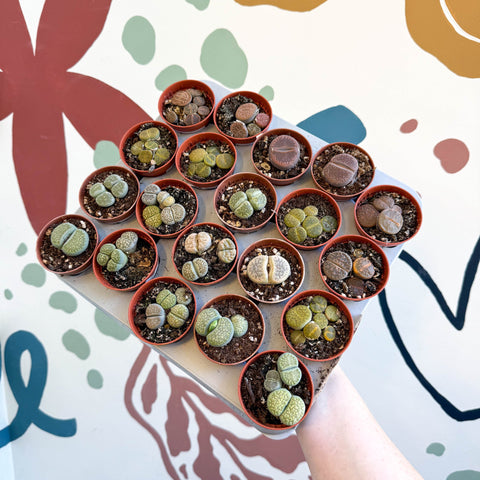
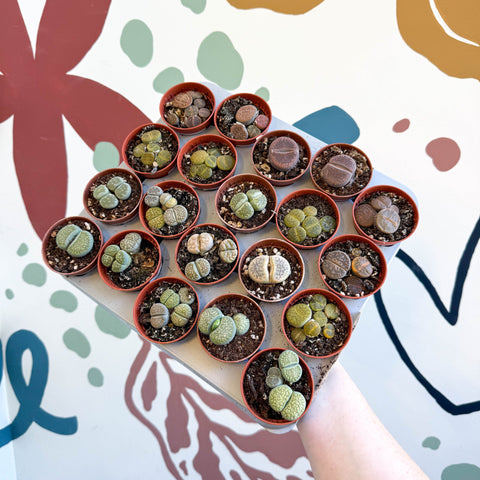
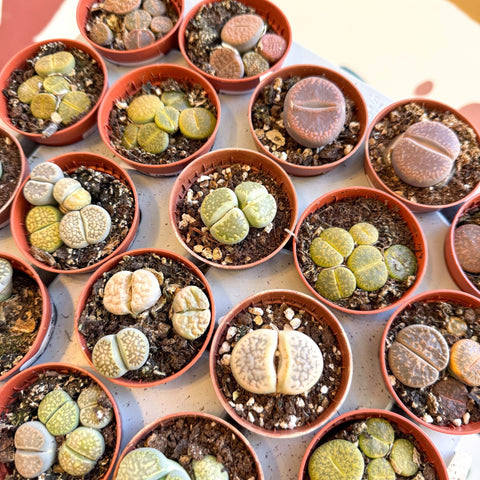
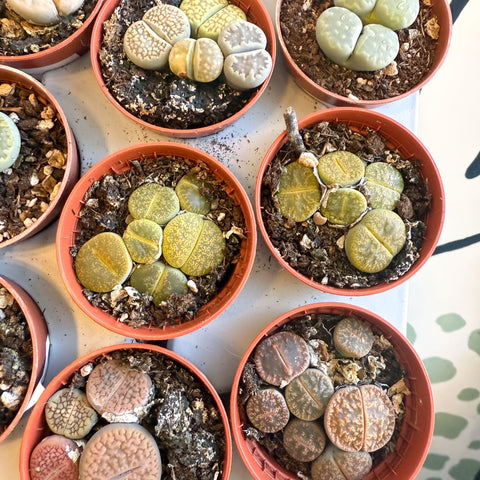
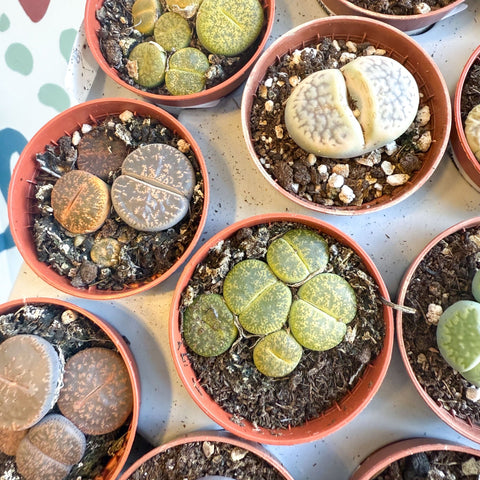
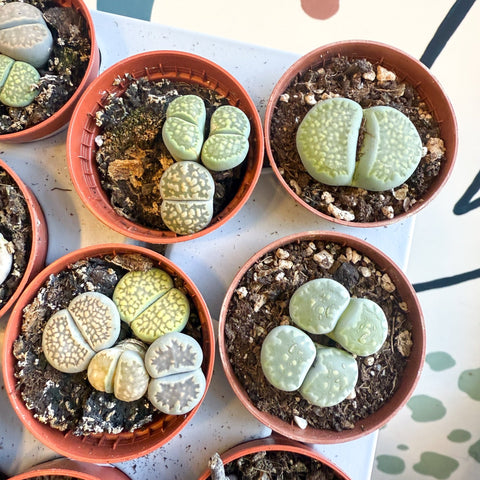
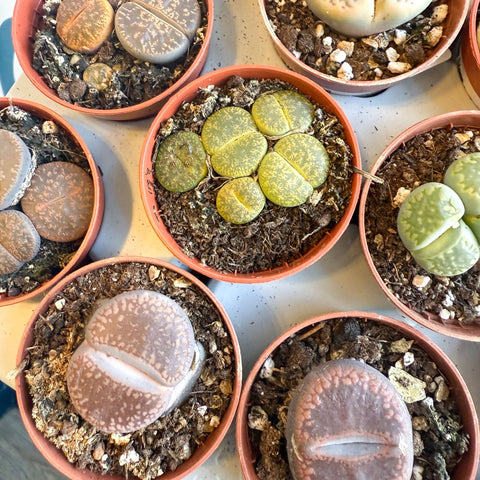
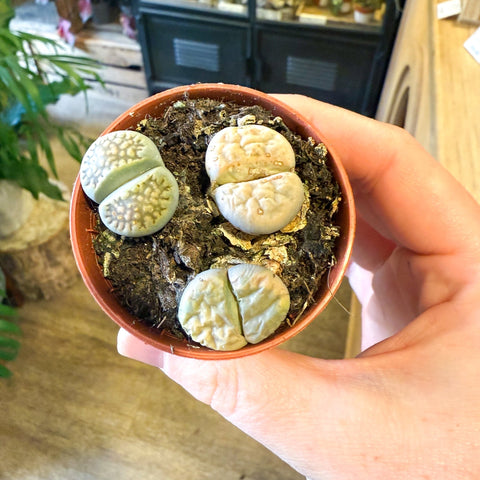
Lithops lesliei ist eine der bekanntesten Lithops-Arten und wird für ihr steinähnliches Aussehen und ihre aufwendig gemusterten Blätter in erdigen Braun-, Grau- oder Grüntönen geschätzt. Dieser langsam wachsende Sukkulent stammt aus Südafrika und fügt sich in der Wildnis in seine Umgebung ein, um nicht gefressen zu werden – was ihn zu einem wahren Meister der Tarnung macht. Mit der richtigen Pflege kann er im Spätsommer oder Herbst auch kleine gänseblümchenartige gelbe Blüten hervorbringen. Bitte beachten Sie, dass es sich beim Kauf um eine zufällig ausgewählte Pflanze handelt.
Wissenschaftlicher Name
Lithops lesliei (benannt nach Rev. Leslie, der die Art entdeckte)
Synonyme
Keine weit verbreitet, aber oft falsch geschrieben als „Lithops leslei“
Gemeinsamer Name
Lebender Stein, Kieselsteinpflanze, Blühender Stein
Herkunft
Südafrika – insbesondere die Provinzen Freistaat und Nordkap
Licht
Benötigt helles, direktes Licht, um zu gedeihen. Ein sonniges Südfenster ist ideal. Wenn sie sich streckt oder verfärbt, benötigt sie möglicherweise mehr Sonne.
Wasser
Sehr sparsam gießen. Im Frühling und Herbst nur gießen, wenn der Boden vollständig trocken ist. Nicht gießen während der Winter- oder Sommerruhe, insbesondere während des Blattwechsels (wenn ein neues Blattpaar aus dem alten hervorkommt).
Luftfeuchtigkeit
Niedrige Luftfeuchtigkeit ist am besten. Vermeiden Sie das Besprühen oder das Platzieren in feuchten Bereichen wie Badezimmern.
Erde
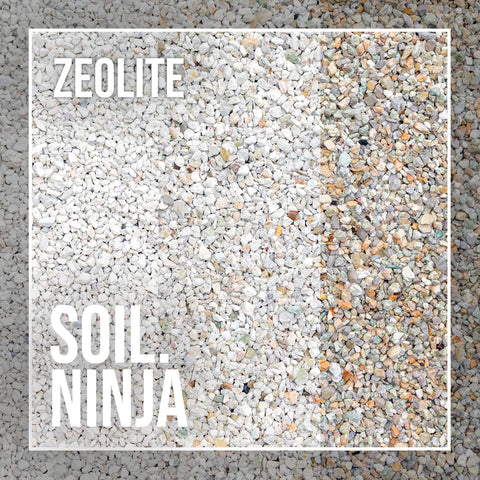
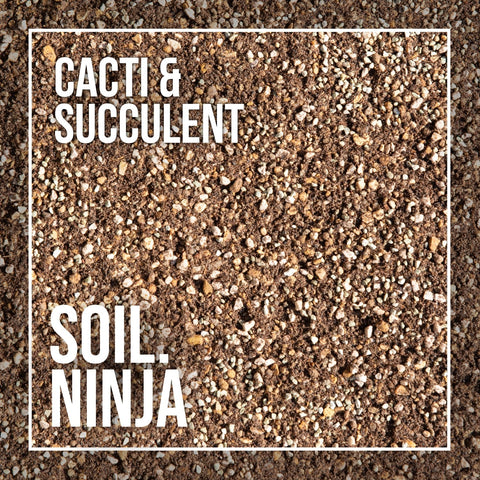
Verwenden Sie eine gut durchlässige, kiesige Mischung – Kakteenerde mit zusätzlichem Sand, Bimsstein oder Perlit. Lithops sind in dichter Erde sehr anfällig für Fäulnis.
Nahrung
Dünger ist optional – falls verwendet, einmal jährlich im Frühjahr einen verdünnten Kakteendünger anwenden.
Temperatur
Gedeiht bei 18–25°C. Kann höhere Temperaturen vertragen, wenn sie trocken ist. Vor kalter Zugluft und Temperaturen unter 10°C schützen.
Haustiersicher
Ja – ungiftig für Haustiere und Menschen.
Sprouts Top-Tipps
Niemals gießen, wenn die Pflanze sich teilt oder ihre Blätter ersetzt – lassen Sie die äußeren Blätter natürlich trocknen und schrumpfen, bevor Sie das Gießen wieder aufnehmen. Übermäßiges Gießen während dieser Phase ist die häufigste Ursache für Fäulnis.
Extras
Kann im Spätsommer oder Frühherbst, wenn sie reif ist, fröhliche gelbe, gänseblümchenartige Blüten hervorbringen.
Wussten Sie schon?
Jedes Lithops-Paar hat ein durchsichtiges „Fenster“ auf der oberen Oberfläche, das Licht für die Photosynthese eindringen lässt – eine clevere Wüstenanpassung!