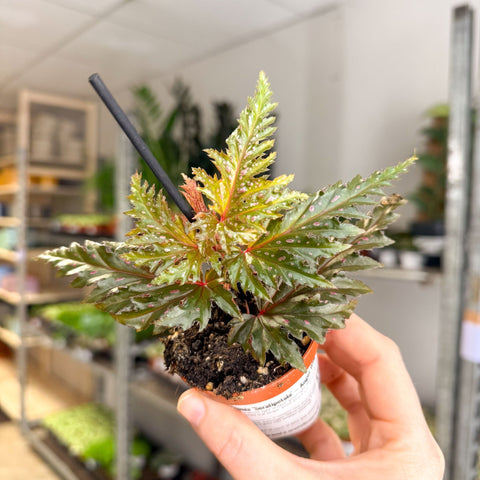
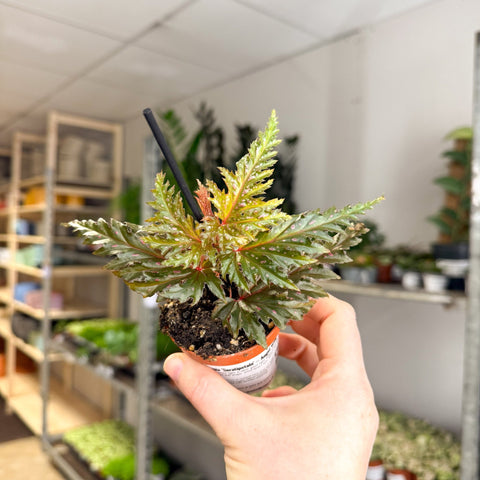
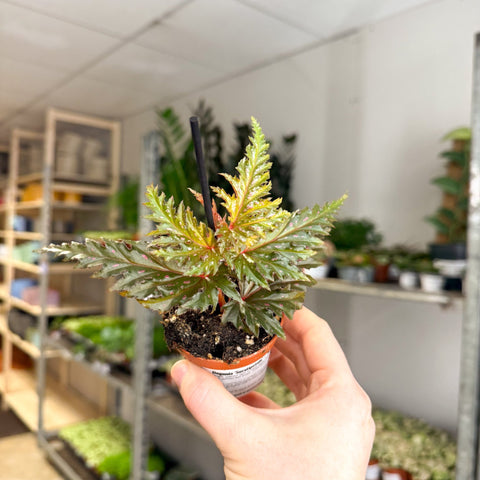
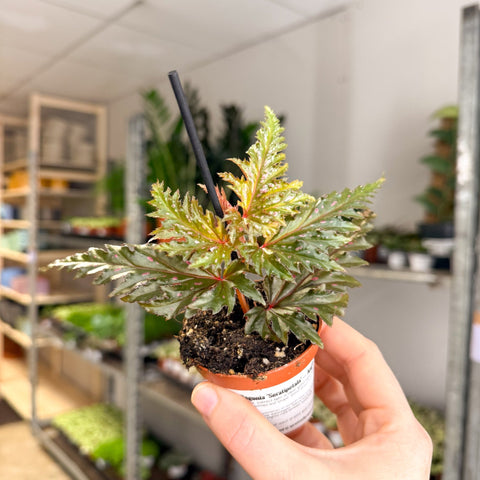
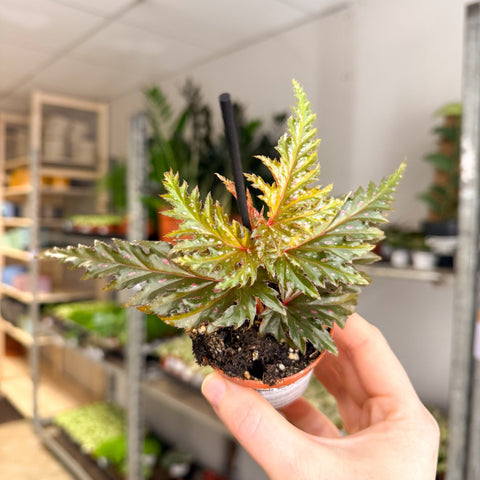
Strukturell und charaktervoll ist die Begonia 'Seratipetala' eine auffällige Stockbegonie, die wegen ihrer länglichen, flügelförmigen Blätter mit den markanten gezackten Rändern angebaut wird. Tiefgrünes Laub ist oft mit subtilen hellen Flecken gesprenkelt und wird von aufrechten, gegliederten Stielen getragen, was dieser Pflanze ein kühnes, architektonisches Aussehen verleiht. Mit ihrer etwas dramatischeren Silhouette als klassische Polka-Dot-Begonien ist sie eine großartige Statement-Pflanze für helle Innenräume.
Wissenschaftlicher Name
Begonia (Cane Group hybrid) 'Seratipetala'
'Seratipetala' ist eine kultivierte Stockbegonie, die unter einem Handelsnamen verkauft wird, der sich auf ihre gezackten (gezähnten) Blattränder bezieht. Sie ist eng mit Begonien des Maculata-Typs verwandt und könnte von Begonia seratipetala abstammen, aber im Anbau sollten die Pflanzen eher als Hybriden und nicht als echte Arten behandelt werden.
Synonyme
Manchmal wird sie auch als Begonia Wings 'Seratipetala' verkauft oder zu den Flügelbegonien vom Maculata-Typ gezählt.
Gebräuchlicher Name
Engelsflügel-Begonie
Herkunft
Kultivierter Hybrid, abgeleitet von Stockbegonien, die in Brasilien beheimatet sind.
Licht
Helles, indirektes Licht ist ideal. Gutes Licht fördert ein kräftiges Wachstum und eine gut definierte Blattform. Vermeiden Sie direkte Sonneneinstrahlung, die die Blätter verbrennen kann.
Wasser
Gießen Sie, wenn die oberen paar Zentimeter des Substrats getrocknet sind. Halten Sie den Boden leicht feucht, aber niemals durchnässt. Reduzieren Sie das Gießen im Winter und lassen Sie das Substrat zwischen den Wassergaben etwas mehr austrocknen.
Luftfeuchtigkeit
Bevorzugt mäßige Luftfeuchtigkeit. Vermeiden Sie direktes Besprühen der Blätter; verwenden Sie stattdessen eine mit Kieselsteinen gefüllte Schale, gruppieren Sie Pflanzen oder stellen Sie sie in einen natürlich feuchten, aber hellen Raum.
Erde
Verwenden Sie eine gut durchlässige, torffreie Zimmerpflanzenerde mit zusätzlichem Splitt oder Perlit. Eine gute Drainage ist unerlässlich, um die Wurzeln gesund zu halten.
Düngung
Düngen Sie während der Wachstumsperiode (Frühling bis Frühherbst) alle 2–3 Gießvorgänge mit einem ausgewogenen Flüssigdünger für Zimmerpflanzen. Im Winter die Düngung einstellen.
Temperatur
Am besten zwischen 18–24°C halten. Vor kalter Zugluft schützen und Temperaturen unter 13°C vermeiden.
Haustiersicher
Bei Einnahme giftig. Außerhalb der Reichweite von Haustieren und Kindern aufbewahren.
Sprouts Top-Tipps
Diese gezackten Blätter zeigen schnell Stress – trockene Ränder bedeuten oft trockene Luft oder unregelmäßiges Gießen, daher ist eine gleichmäßige Feuchtigkeit und ein stabiler, warmer Standort anzustreben.