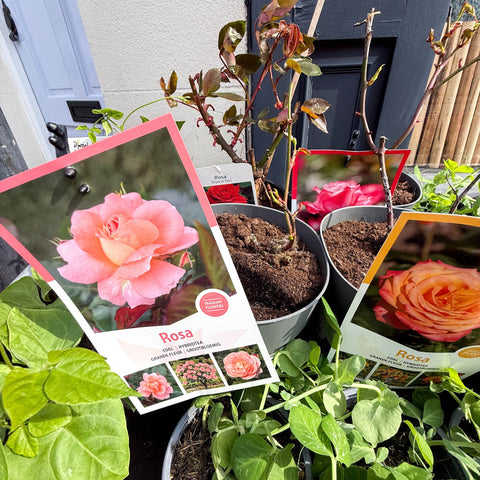
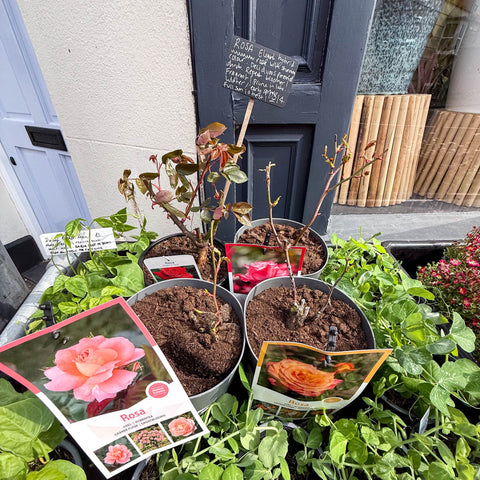
Mit diesen Rosen bringen Sie atemberaubende Sommerblüten in allen Regenbogenfarben in Ihren Garten. Winterhart in ganz Großbritannien bis -20 °C.
Große, leuchtende Blüten sind die Spezialität dieser Gruppe von Hybridrosen. Von Rot bis Lila, von Rosa bis Orange und fast alles dazwischen – füllen Sie Ihren Garten mit ihrer Schönheit. Edelrosen eignen sich auch hervorragend als Schnittblumen, da jede Blüte an einem eigenen Stiel wächst – und Ihr Rosenstrauch kann bis in den Herbst hinein blühen, so dass Sie jedes Jahr monatelang Blüten ins Haus holen können. Jede Rose hat eine aufrechte, vasenförmige Gestalt, die voller Blütenblätter ist; genießen Sie sie, indem Sie sicherstellen, dass sie ausreichend Sonne und viele Nährstoffe erhalten.
|
Mehrjährige Pflanze
|
Blume, buschiger Wuchs
|
Sommer- & Herbstblüher, meist in drei Schüben; Laub von Frühling bis Herbst.
|
Wissenschaftlicher Name
Rosa x hybrida (Hybridrose)
Gängiger Name
Edelrose
Herkunft
Obwohl diese Rose eine in Kultur gezüchtete Hybride ist, gibt es Rosenarten, die in den meisten Ländern der nördlichen Hemisphäre heimisch sind.
Schnitttipps
Schneiden Sie Ihre Rose im Spätwinter, sobald sie wieder zu wachsen beginnt (dies kann in südlichen Gebieten Mitte Februar sein, in nördlicheren und kälteren Gebieten sollten Sie jedoch bis März warten). Ein ziemlich starker Rückschnitt fördert ein kräftigeres Wachstum – weitere Details finden Sie auf der Seite der RHS hier.
Wert für die Tierwelt
Diese Rosen ziehen Bestäuber an, sind aber aufgrund ihrer vielen Blütenblätter keine ideale Pollenquelle.
Standort
Pflanzen Sie sie in voller Sonne; Ihre Rose gedeiht sowohl an geschützten als auch an exponierten Standorten.
Wasser
Bei trockenem Wetter profitiert sie von einer Bewässerung. Achten Sie darauf, dass sie nicht durchnässt wird, weder durch zu viel Wasser auf einmal noch durch eine Pflanzung an einem sumpfigen Ort.
Boden
Ihre Teerose ist nicht wählerisch, was die Bodenart angeht, solange dieser gut durchlässig und humusreich ist.
Nahrung
Halten Sie den Boden fruchtbar. Eine Schicht Mulch pro Jahr sollte ausreichen, um Ihre Rose mit Nährstoffen zu versorgen.
Haustiersicher
Ja; diese Pflanze ist ungiftig, aber beachten Sie, dass sie Dornen hat, die für neugierige Finger und Pfoten schmerzhaft sein können.
Sprouts Top-Tipps
Um die Blüte zu maximieren, sollten Sie Ihre Rose gut versorgen. Eine zusätzliche Düngung im Frühling und im Sommer, die den jährlichen Mulch ergänzt, hilft. Spezielle Rosendünger sind am besten, wenn Sie sich auf Rosen spezialisiert haben, aber nicht unbedingt notwendig.